
Hal Levison on the Mission to Jupiter’s Trojan Asteroids
Listen to the podcast here or wherever you get your podcasts.
A key question about the early history of the Solar System is whether the giant planets formed roughly at the distances from the Sun they presently occupy, or, as some theories predict, much closer to the Sun. The discovery of other solar systems with radically different configurations of planets has made this question more pressing, since it appears that the configuration of the Solar System might be atypical.
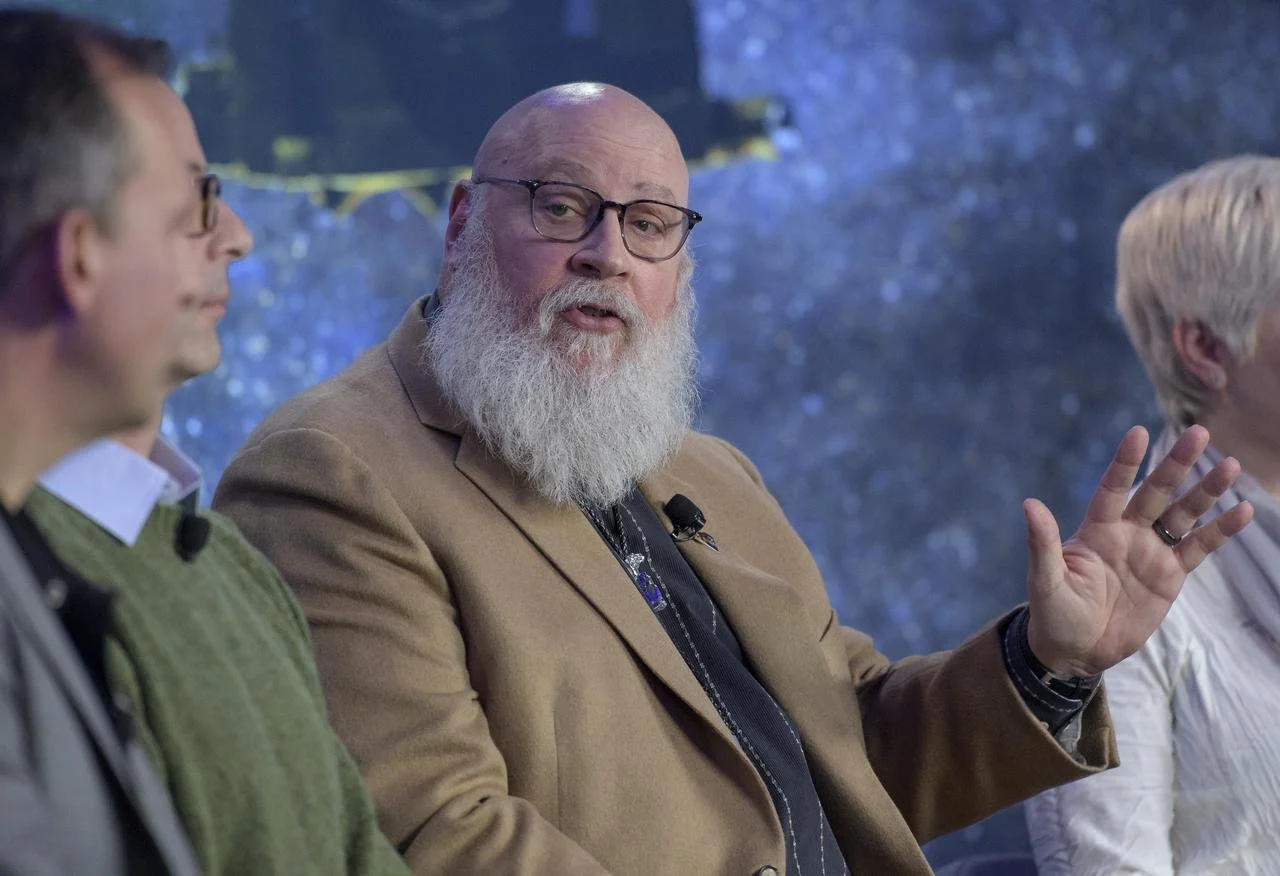
In the podcast, Hal Levison explains why the Trojan asteroids of Jupiter offer us the best opportunity to discriminate between the various models of Solar System evolution. And that is why a spacecraft called Lucy is now well on its way to a rendezvous with these asteroids.
Hal Levison is the Principal Investigator of the Lucy mission. He studies the dynamics of astronomical objects and, in particular, the formation and long-term behavior of solar system bodies. He is one of the original proponents of the Nice model (named after the city where it was conceived), a scenario that proposes the migration of the giant planets from an initial compact configuration closer to the Sun to their present positions. He is Chief Scientist in the Department of Space Sciences at the Southwest Research Institute in Boulder, Colorado.
Podcast Illustrations
Images courtesy of NASA and SWRI unless otherwise indicated.
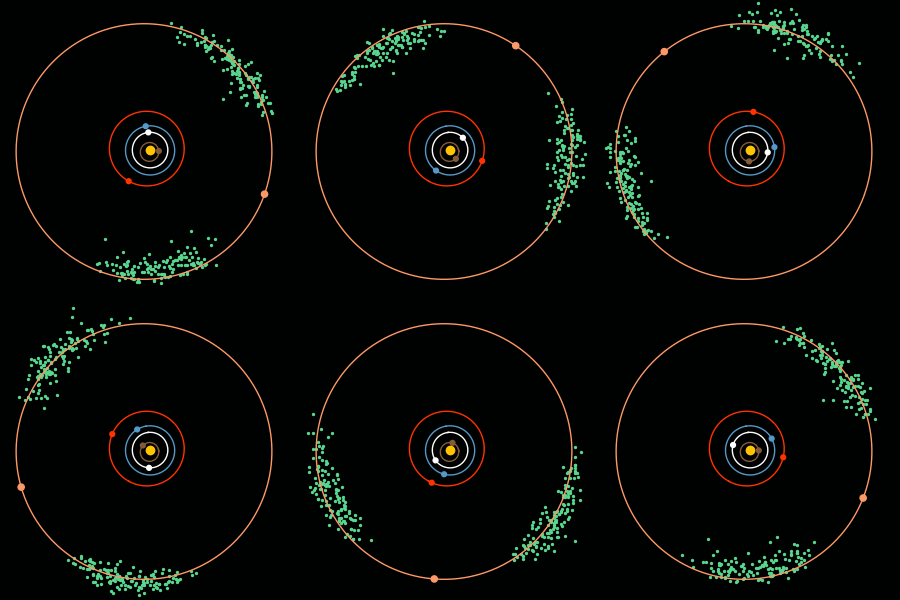
Animation showing the leading and trailing swarms of Trojan asteroids (green) on either side of Jupiter (yellow). The inner planets Mars (red), Earth (blue), Venus (white), and Mercury (brown) are also shown. As Levison explains in the podcast, the Trojans occupy a stable orbit where the centrifugal force and the gravitational pull of the Sun and Jupiter are balanced.
The Lucy Spacecraft
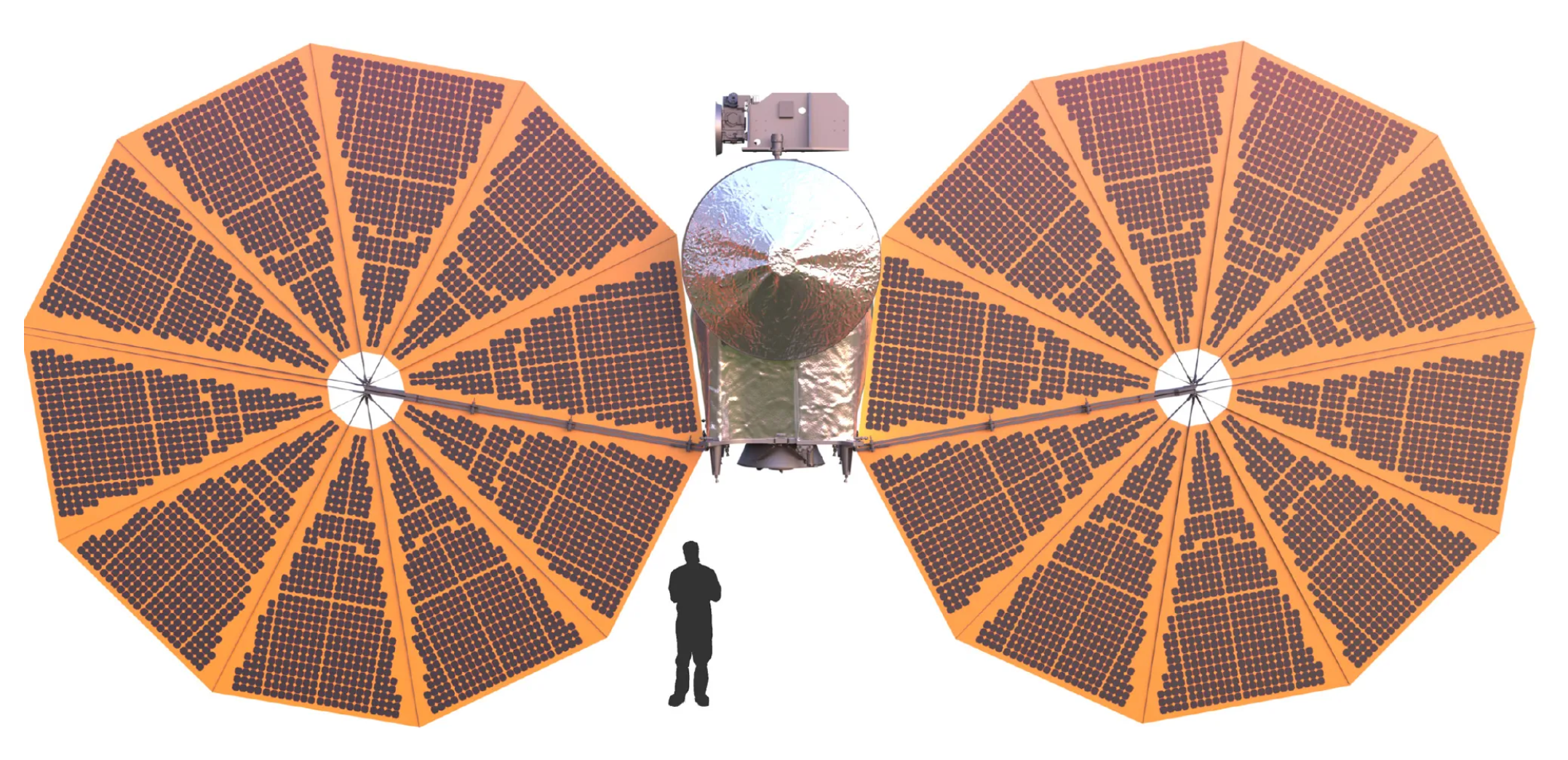
Lucy’s two solar panels are the largest part of the spacecraft, each measuring 7.3 m in diameter. These are needed as Lucy is going further from the Sun than any previous solar-powered mission.
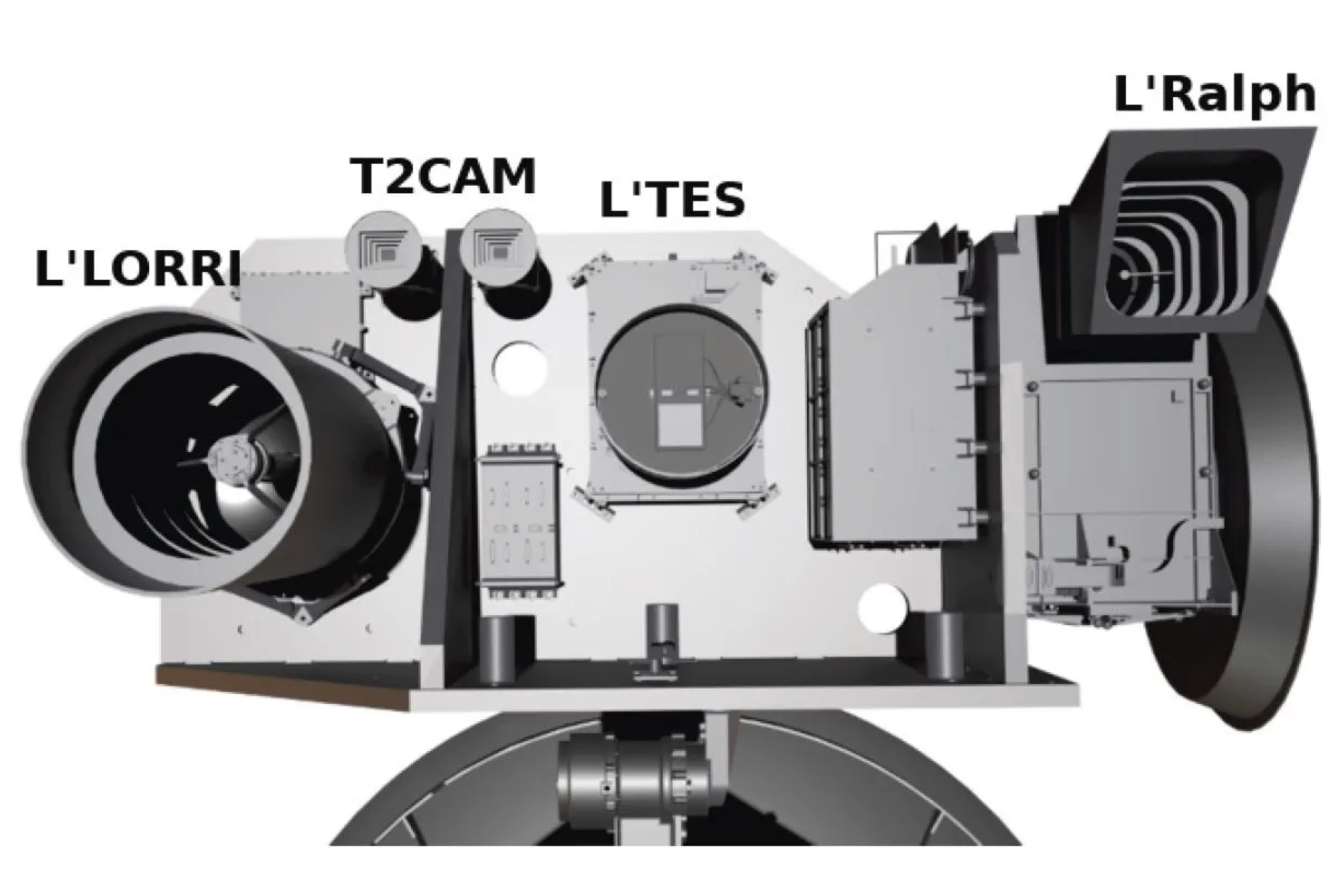
Instruments carried by Lucy. L’Ralph is a color-imaging camera, which will take color images of the Trojans and help determine how active they are. It also has an infrared-imaging spectrometer that will look for the absorption lines that serve as the fingerprints for silicates, ices, and organics that are expected to be present on the surface of the Trojan asteroids.
L’LORRI, the LOng Range Reconnaissance Imager is a high spatial resolution visible imager covering the wavelengths 0.35-0.85 microns. This camera will provide the most detailed images of the surface of the Trojans.
L’TES is a Thermal Emission Spectrometer (6-75 microns) that will allow the Lucy team to learn much more about the properties of the Trojans, such as their thermal inertia andhow well the bodies retain heat, which tells us about the composition and structure of material on the surface of the asteroids.
Lucy will also use its High Gain Antenna to determine the masses of the targets using the Doppler shift of the radio signal. It will also be able to use its terminal-tracking camera (T2CAM) to take wide-field images of the asteroids to better constrain the asteroids’ shapes. The combination will allow the bulk density of these bodies to be determined.
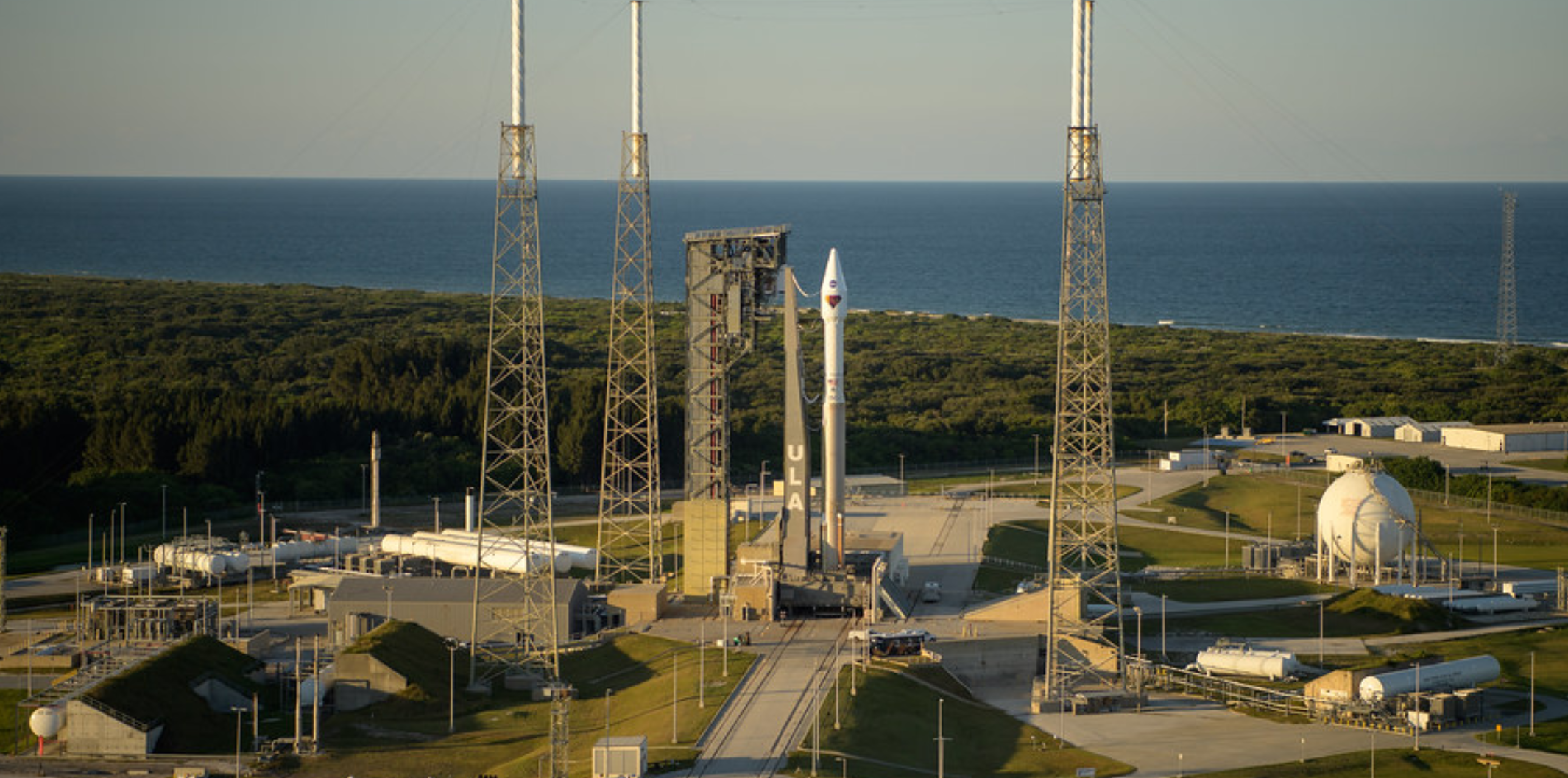
Lucy atop an Atlas V 401 rocket on the launchpad. As Levison explains in the podcast, a relatively small rocket was used to save costs. This resulted in a slow initial speed relative to the Earth. Multiple Earth gravity assists were used to accelerate the spacecraft into an orbit that reaches out as far as the orbit of Jupiter and the Trojans.
Lucy’s Trajectory
Top-down, solar system view of the entire Lucy mission in a Jupiter-rotating reference frame. In this reference frame, Jupiter appears fixed in space. The regions occupied by the Trojan asteroids are at left and right along Jupiter’s orbit. The video shows Earth (green), Lucy (blue), Jupiter (orange), and the target fly-by asteroids (white). In the leading swarm of Trojans, Lucy will encounter Eurybates on August 12, 2027; Polymele on September 15, 2027; Leucus on April 18, 2028; and Orus on November 11, 2028. The final planned fly-by is with Patroclus in the trailing swarm on March 2, 2033.
NASA's Scientific Visualization Studio
Encounter with Dinkinesh
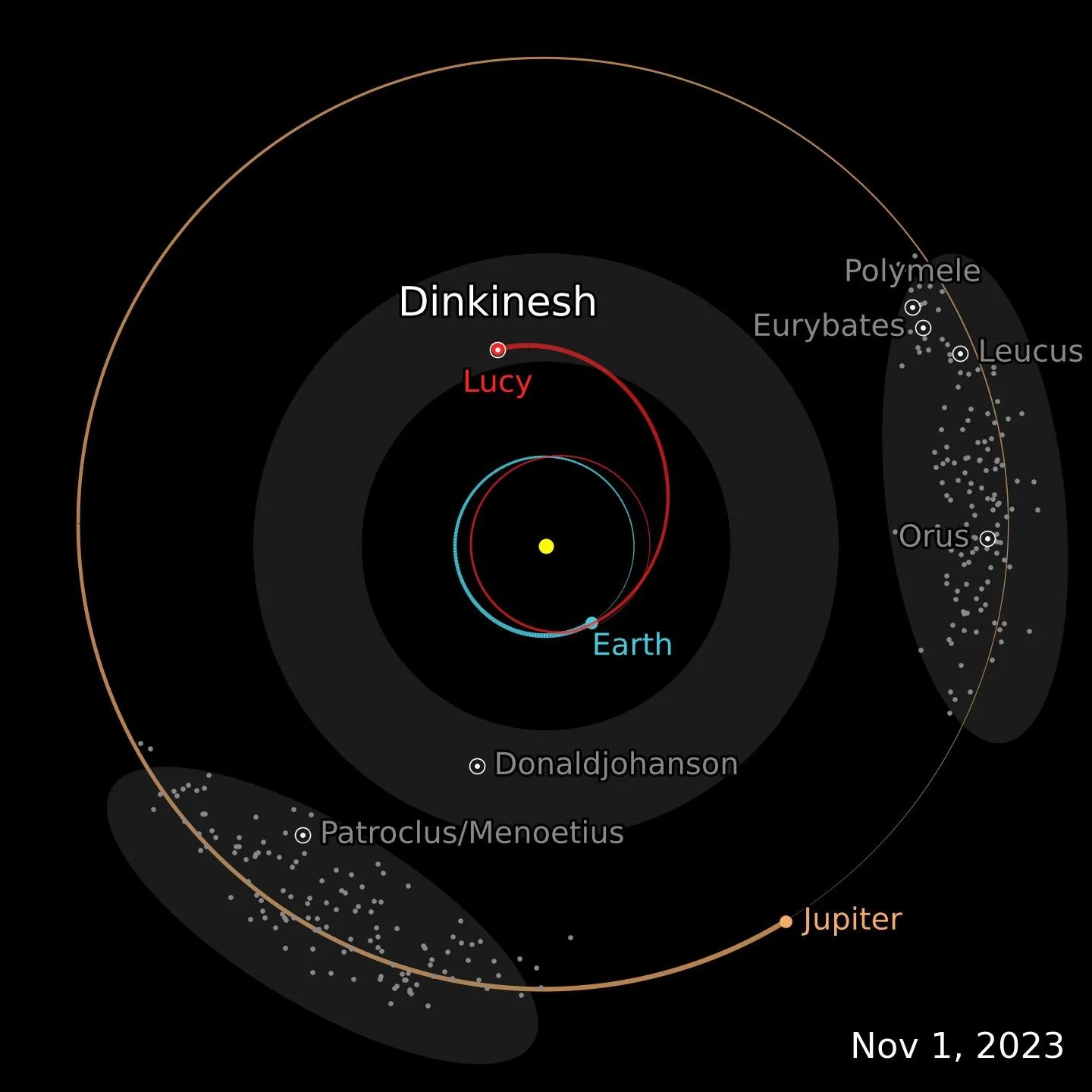
The first body approached by Lucy in 2023 was an asteroid named Dinkinesh in the main asteroid belt. Although primarily intended as a test of Lucy’s instruments, it turned out to be an interesting object in its own right. Imagery from Lucy’s L’LORRI revealed a satellite that is itself a contact binary.
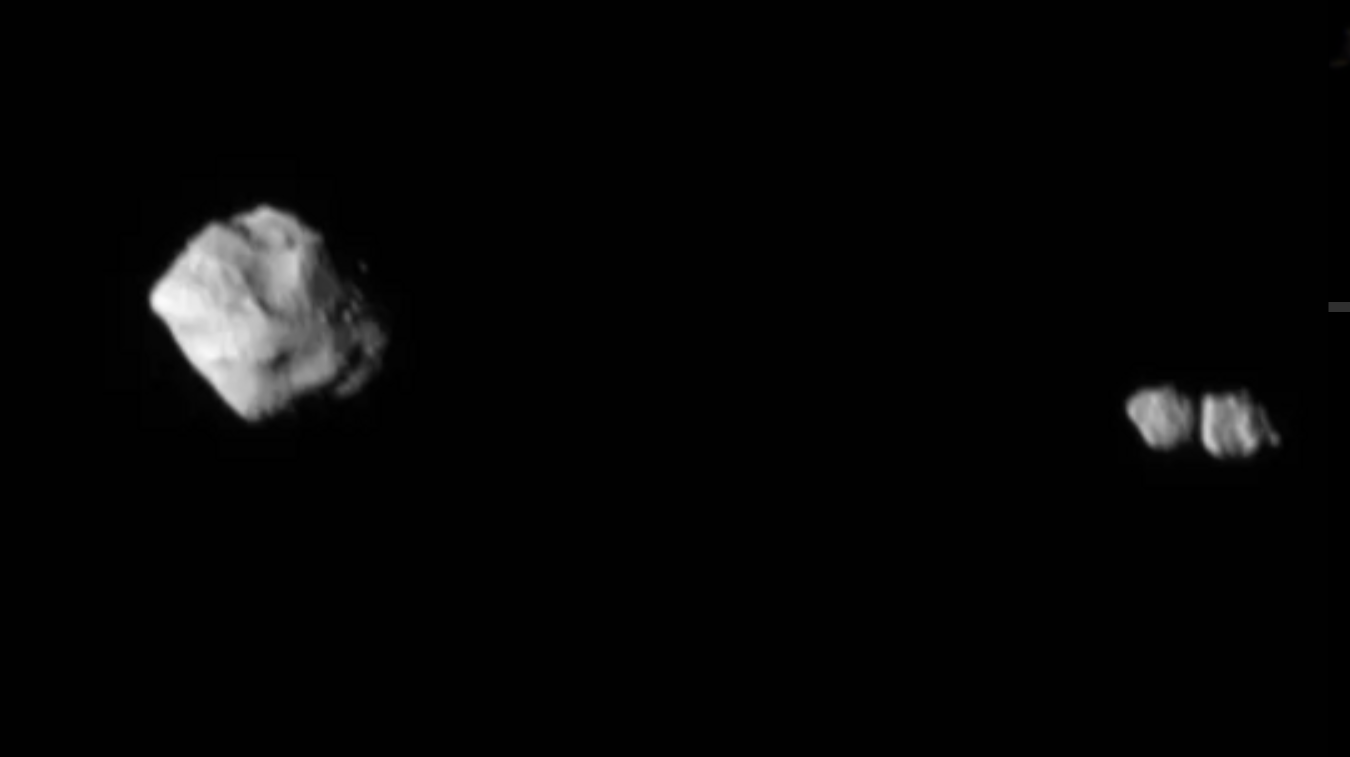
Dinkinesh and its satellite captured from a distance of 430 km. Dinkinesh has a diameter of 700 m.
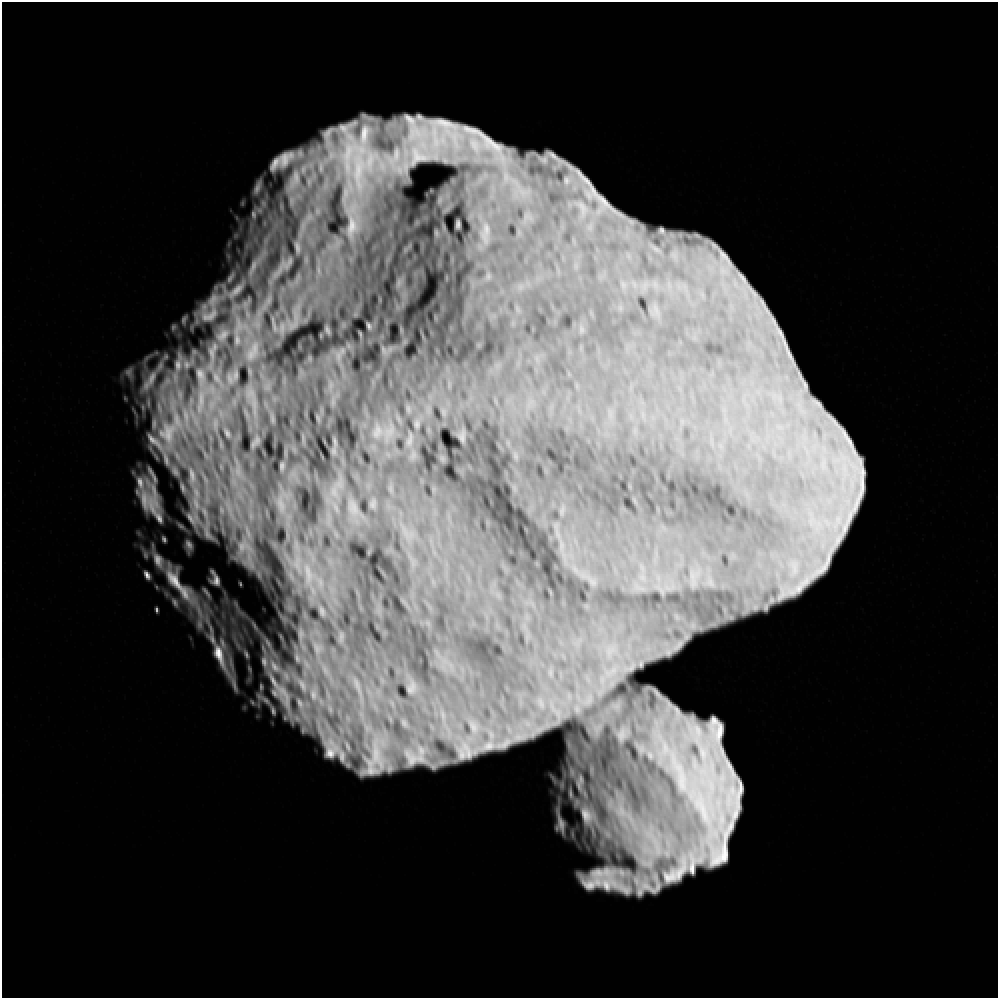
Dinkinesh and its satellite Selam, showing that the satellite is a contact binary. It is the first contact binary satellite of an asteroid ever seen. Each component of Selam has a diameter of 100 m.
Donaldjohanson
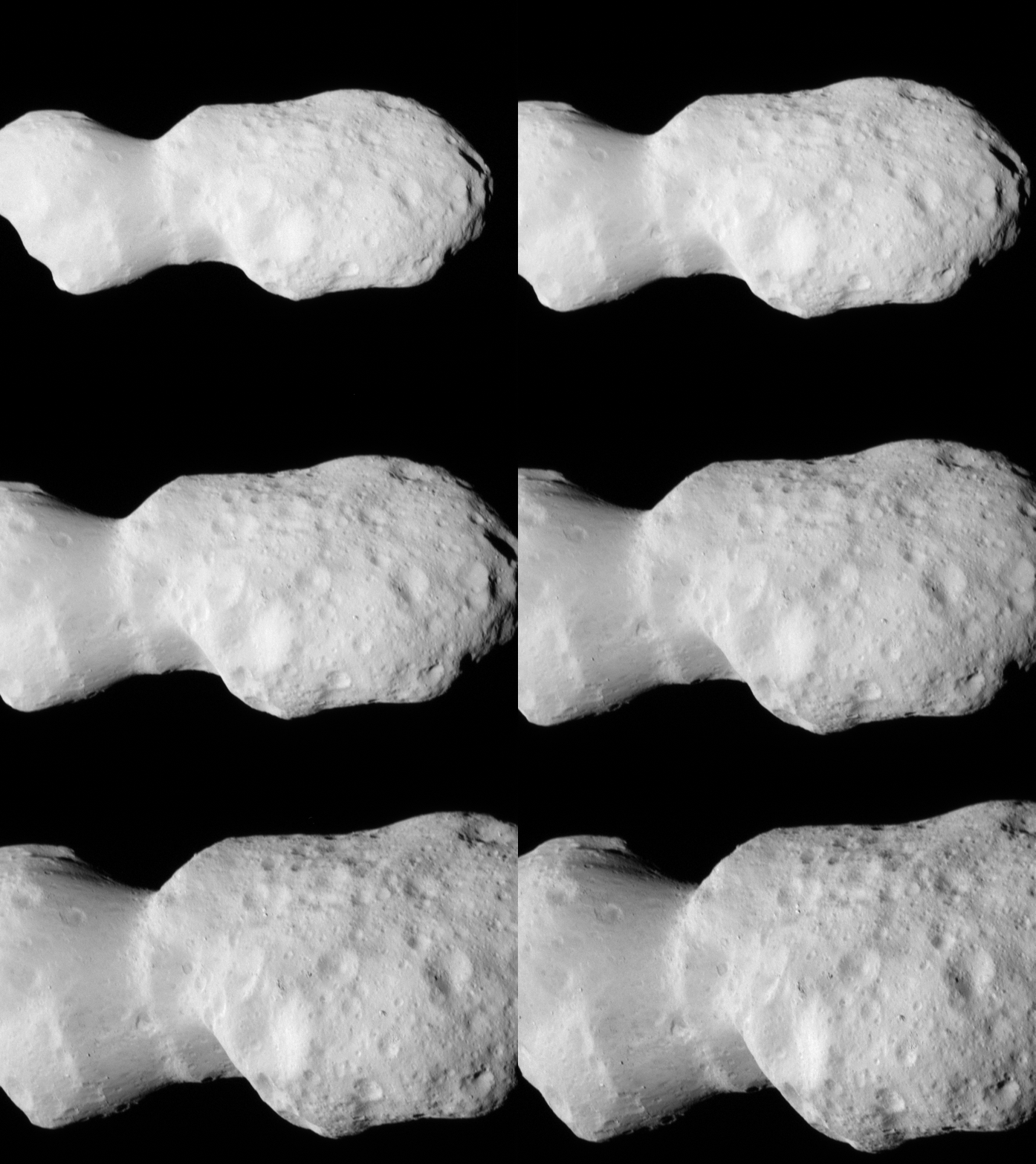
Donaldjohanson is about 8 x 3.5 km in size. It is a fragment of a massive collision that occurred about 150 million years ago that produced the Erigone family of asteroids.
Lucy’s Plaque
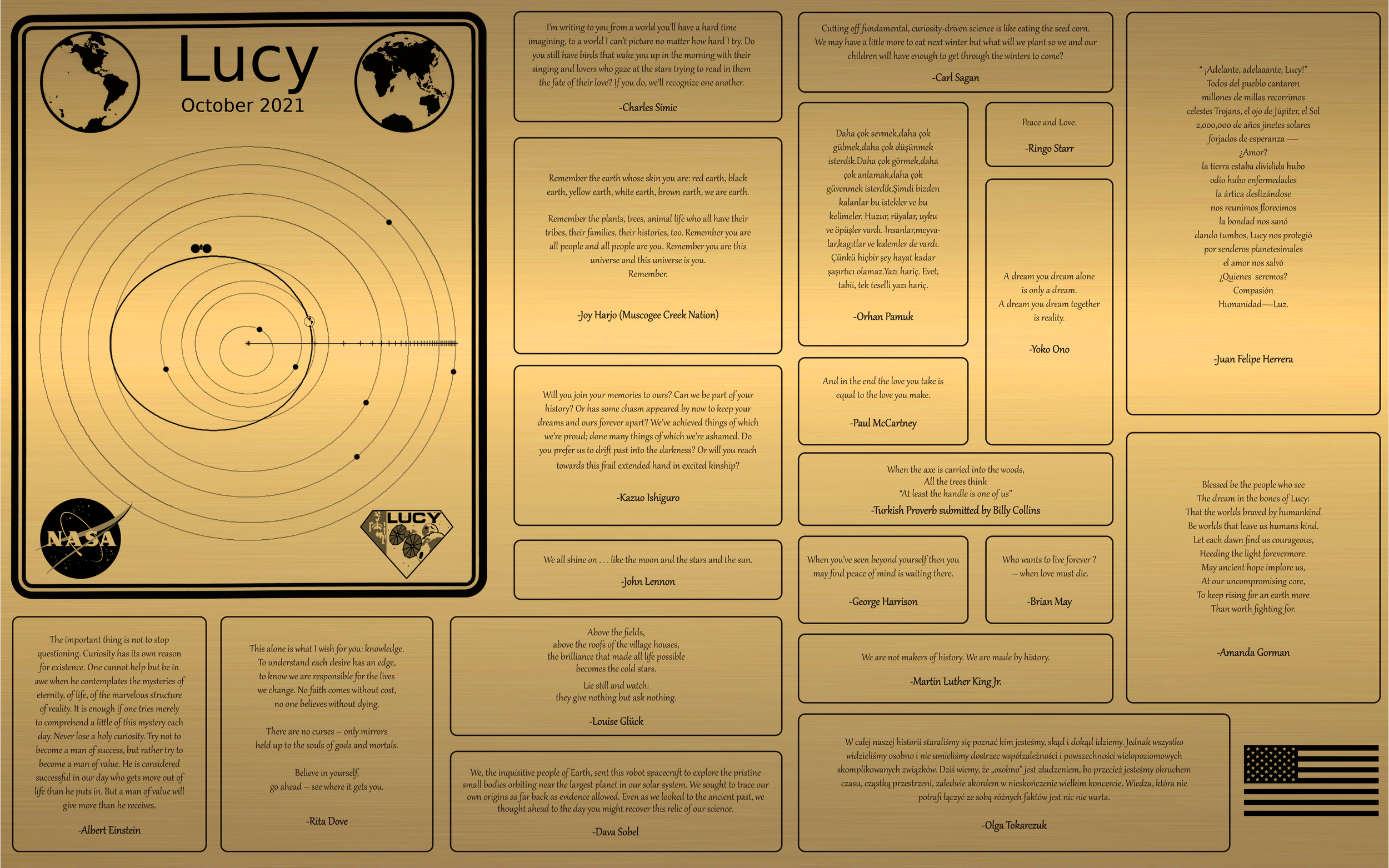
Computer simulations predict that the orbit that takes Lucy to its final encounter with Patroclus in the trailing Trojan swarm is stable with an average lifetime of 2 million years. At its farthest from the Sun, it reaches the orbit of Jupiter, and at its closest to the Sun, it flies just within the orbit of the Earth. Levison and the Lucy team decided to place a plaque on Lucy intended as a message to our distant descendents. By contrast, the Pioneer and Voyager spacecraft are traveling away from the Solar System, and therefore their plaques were designed to tell aliens about our existence and civilization.