
Michael Manga on Wet Eruptions
Listen to the podcast here or wherever you get your podcasts.
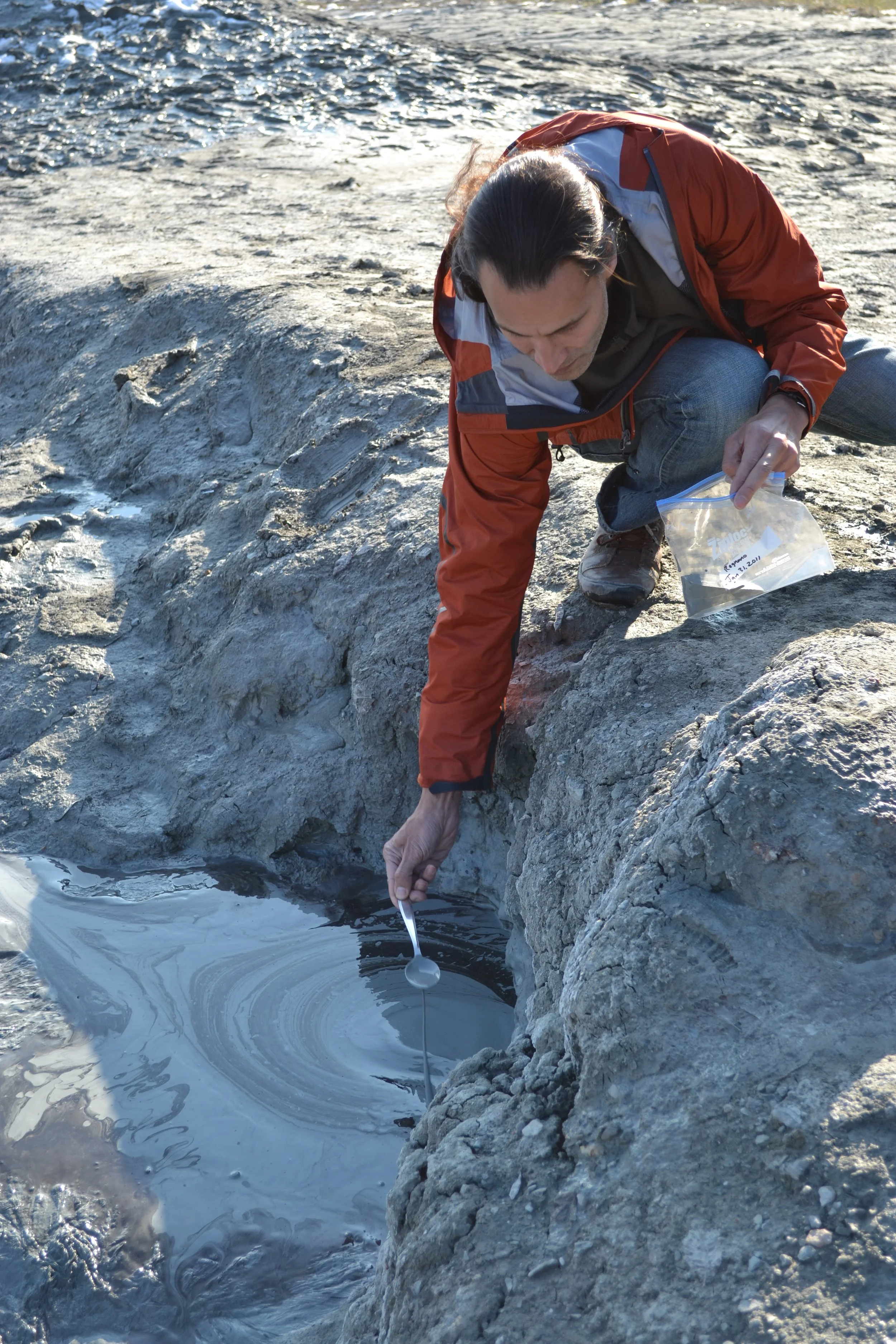
In the podcast, Michael Manga talks about the various ways in which the presence of water can affect eruptions, both here on Earth and elsewhere in the Solar System. Most dramatically, it can vastly amplify the explosive power of a volcanic eruption. The 2022 Hunga Tonga eruption, the most powerful eruption in a lifetime, was a good example of this.
Manga is a Professor in the Earth and Planetary Science department of the University of California, Berkeley.
In the photo he is sampling the Regnano mud volcano in the Apennines in Italy.
Podcast Illustrations
Images courtesy of Michael Manga unless otherwise indicated.
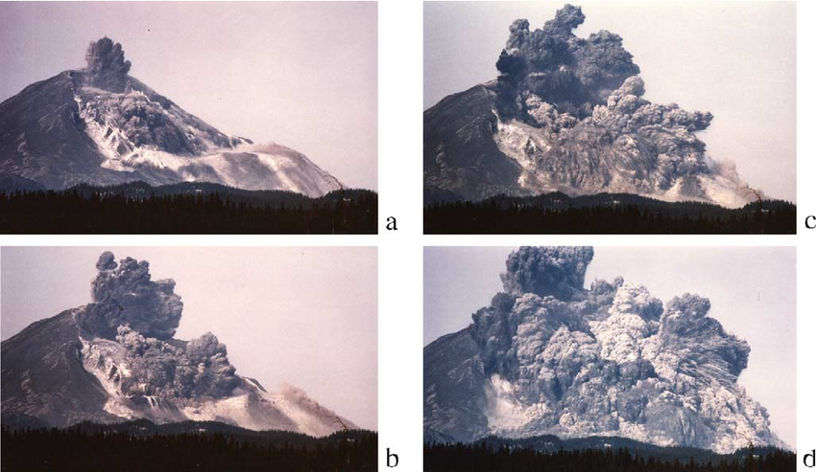
Eruption of Mount St. Helens in 1980. During the eruption, the flank of the volcano collapsed. In this eruption, dissolved water within the magma formed bubbles as the magma depressurized, which drove the eruption.
G. Rosenquist
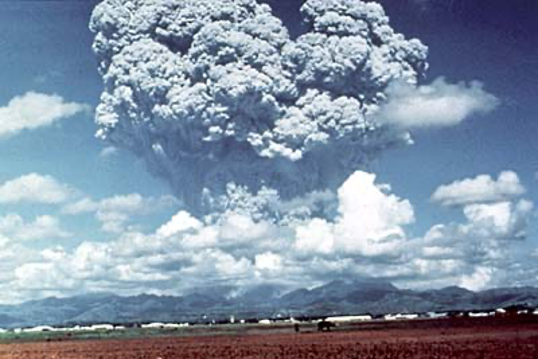
Eruption of Mount Pinatubo in 1991. The ash cloud reached the stratosphere and caused about 0.5°C of cooling for several years. The Hunga Tonga eruption was comparable in explosive power to this eruption. As with the Mount St. Helens eruption, the Mount Pinatubo eruption was driven in part by bubbles formed from water dissolved in the magma.
USGS
2022 Hunga Tonga Eruption
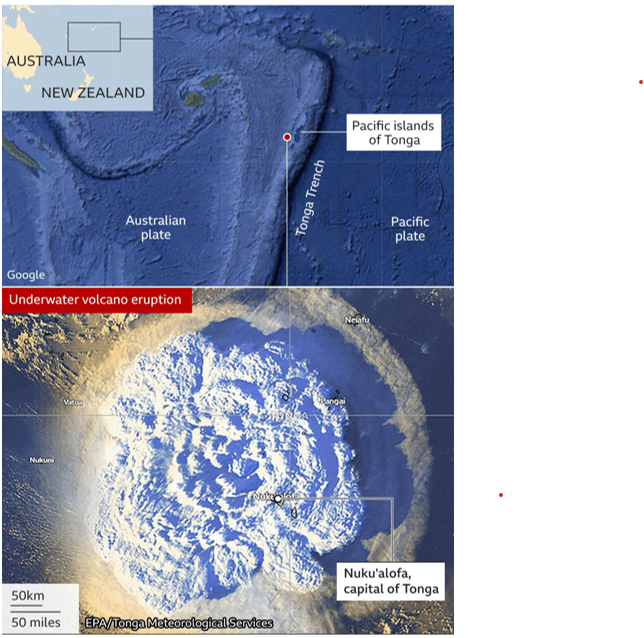
The Hunga Tonga eruption on 15 January, 2022, was the largest eruption in our lifetimes. The plume reached a height of 58 kilometers, and the explosion was heard in Alaska, 8,000 km away. The explosive power stemmed from the conversion of thermal energy to kinetic by the sudden conversion of a large amount of water to steam. The eruption took place at a depth of 850 meters, well above the ~2,200-meter depth below which the pressure is too great for magma to create steam. The image at right and the time-lapse videos below show the spreading of the volcanic ash in the atmosphere. Eventually that ash falls down to the surface.
USGS
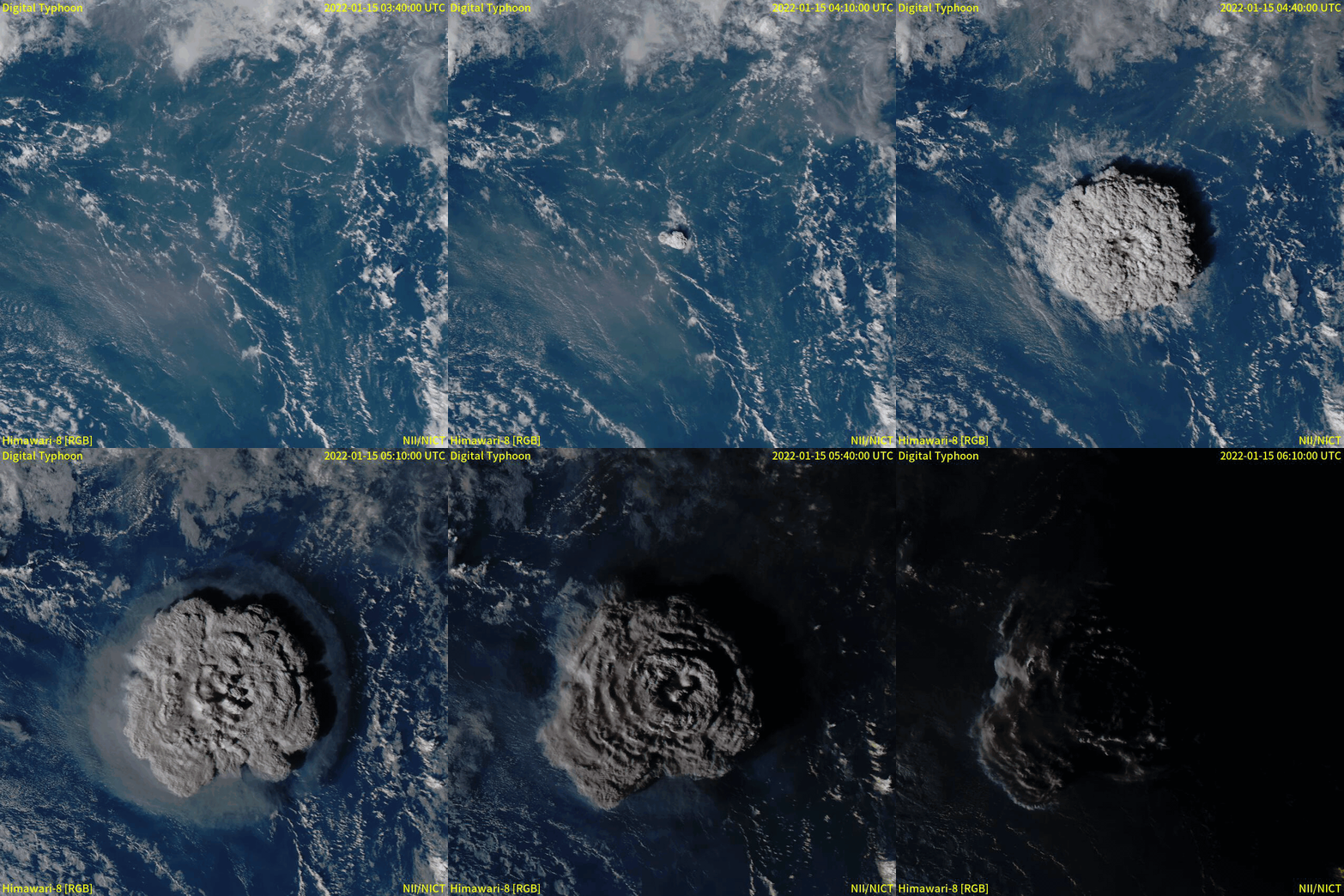
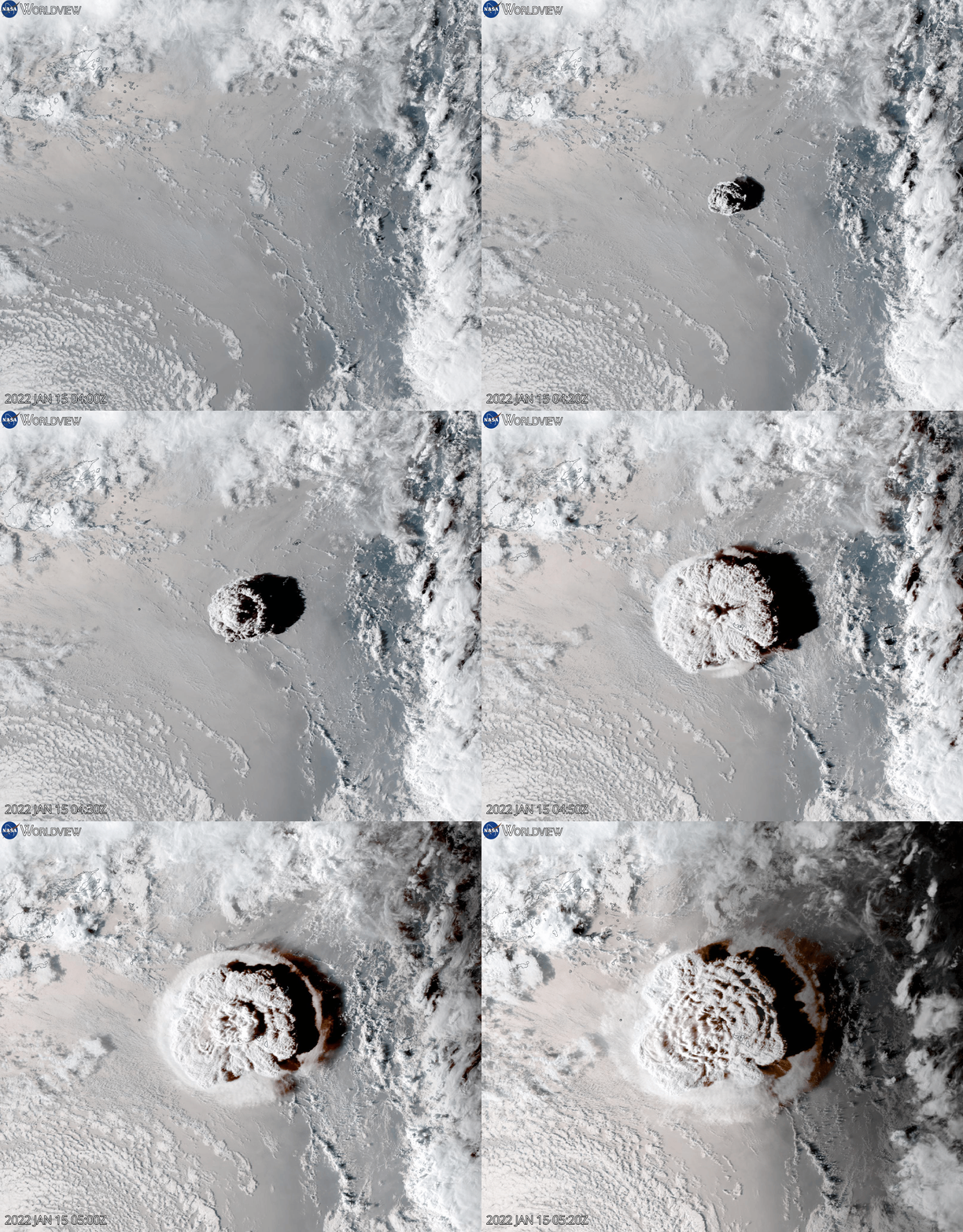
Global images from the GOES-17 and Himawari weather satellites. The bottom animation was created from differences between successive images captured in the water vapor channel and reveals circular gravity waves propagating in the stratosphere emanating from the eruption center. Such gravity waves are analogous to surface waves on water, with vertical variations in density controlling the wave speed.
2012 Havre Eruption
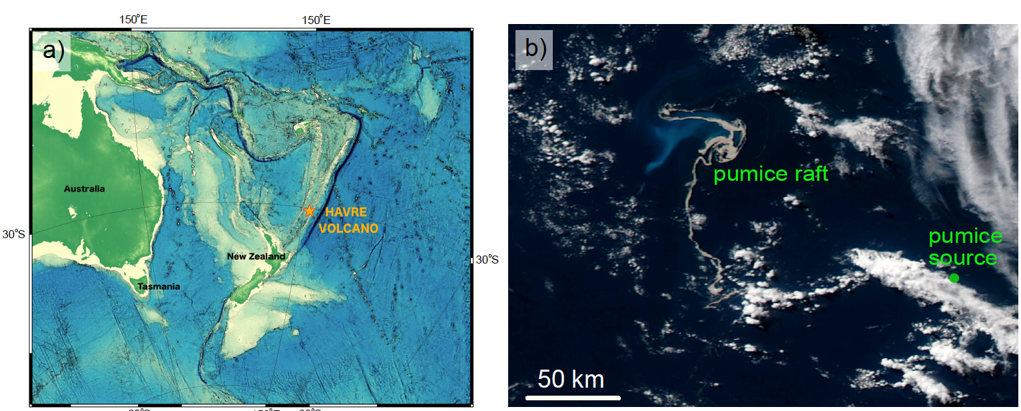
In the podcast, Manga describes the 2012 Havre eruption, which was the largest explosive eruption to date since 1650 AD. As gas vesicles formed within the submarine erupting magma, the magma cooled rapidly and formed pumice, a rock that is full of bubbles and therefore lighter than water. Following the eruption, large floating rafts of pumice drifted across the oceans for months.
Martin Jutzeler, University of Tasmania
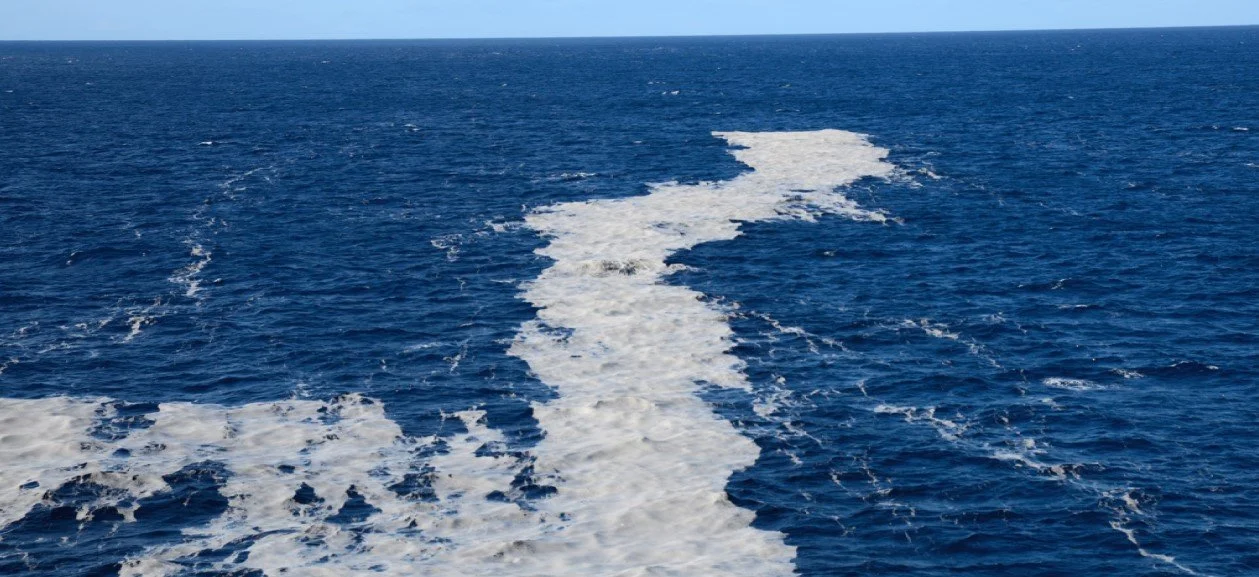
Pumice raft from the Havre submarine volcano seen in the Kermadec Arc in July 2012.
HMNZ Canterbury and Rebecca Carey

Overgrown pumice from the Havre eruption recovered eight months after the eruption took place.
Rebecca Carey
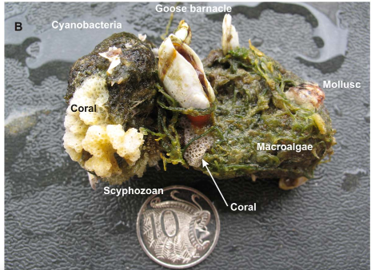
Scott Bryan
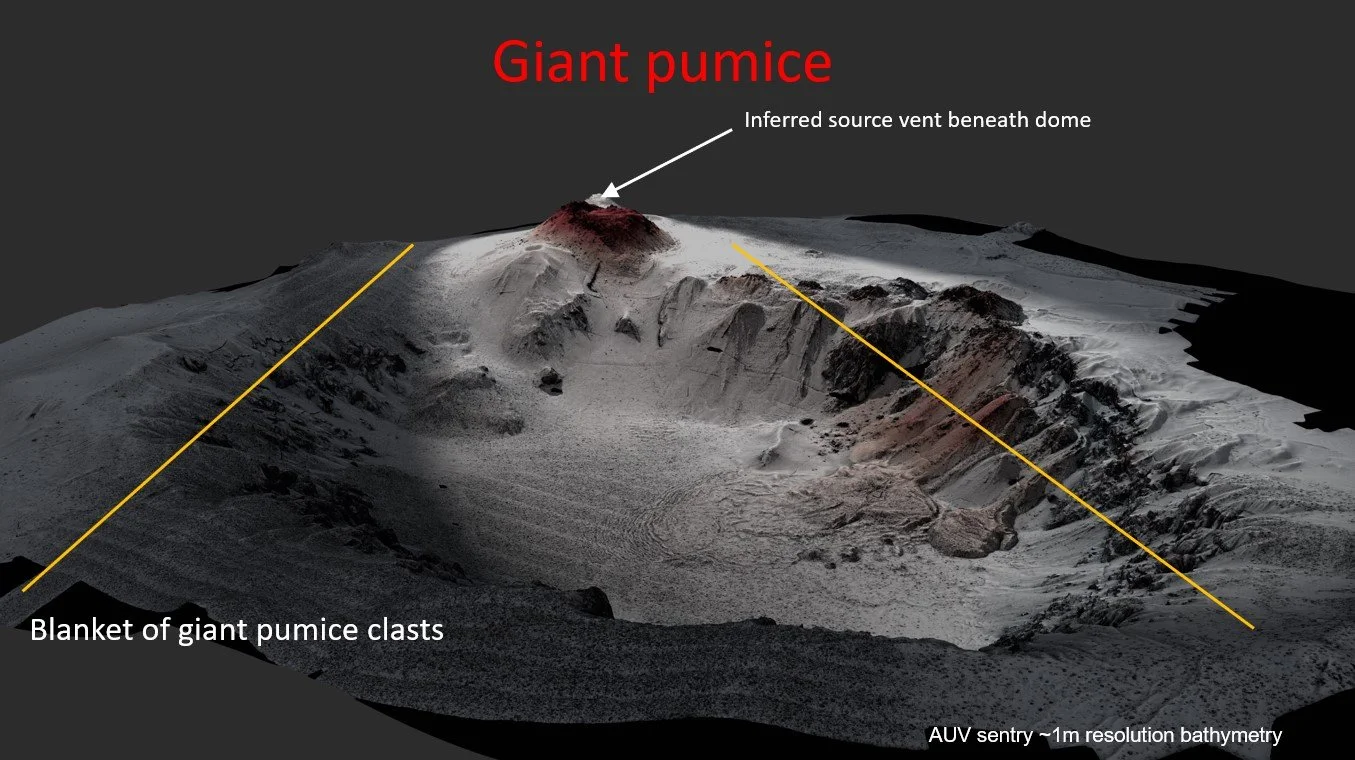
Map of the seafloor following the Havre eruption showed an extensive area blanketed by pumice. The map was made using multibeam sonar. Individual pieces of giant pumice can be seen.
Submarine Eruption Style
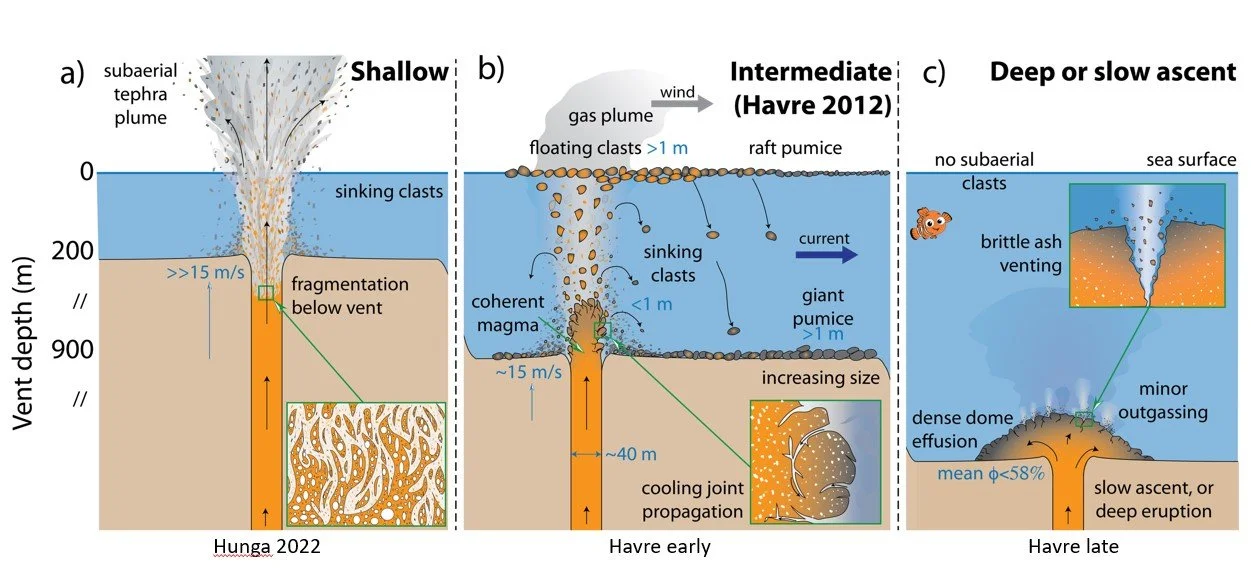
The depth at which an eruption occurs determines the style of eruption. The Hunga Tonga eruption occurred at the relatively shallow depth of 150-200 meters below the ocean surface. The magma fragmented on its way up to the vent, creating a large surface area for contact between magma and water. This caused a very large volume of steam to be generated that greatly magnified the explosive power. The Havre eruption started at about 850 meters below the surface, where the pressure was high enough to inhibit steam formation. The erupting magma remained coherent and formed clasts of pumice as it emerged, some of which were buoyant enough to float and form rafts, while the rest fell to the seafloor as giant clasts. In its later phases, the eruption moved to depths of over 1,000 meters, and the magma emerged effusively in thick flows forming a dome on the seafloor.
Manga, M. et al. (2018), Earth and Planetary Science Letters, 489, 49
Mud Volcanoes
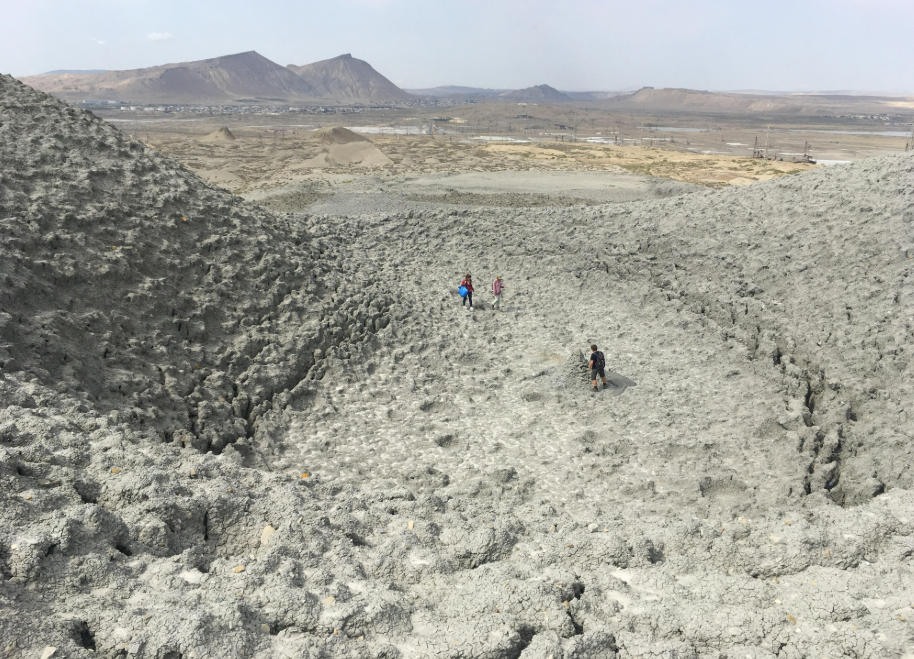
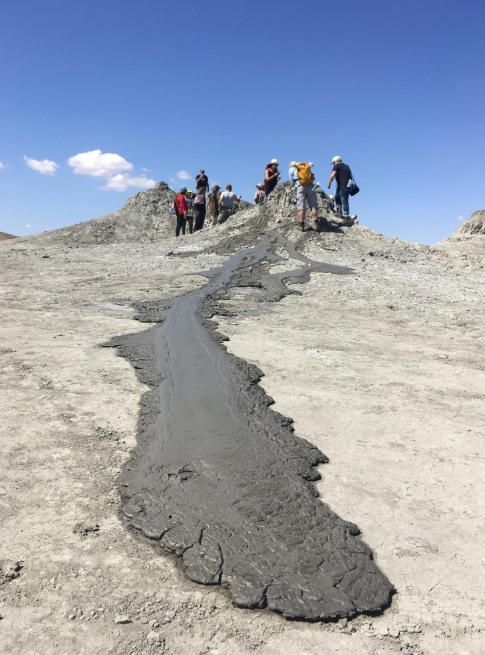
In some mud volcanoes, the sediment comes from depths of over 1 km and is mobilized by tectonic activity. Manga and his team were interested in how fast the mud rose and how the eruptions are influenced by earthquakes. Above and right: mud volcanoes in Azerbaijan studied by Manga and his team.
Euruptions Under Ice
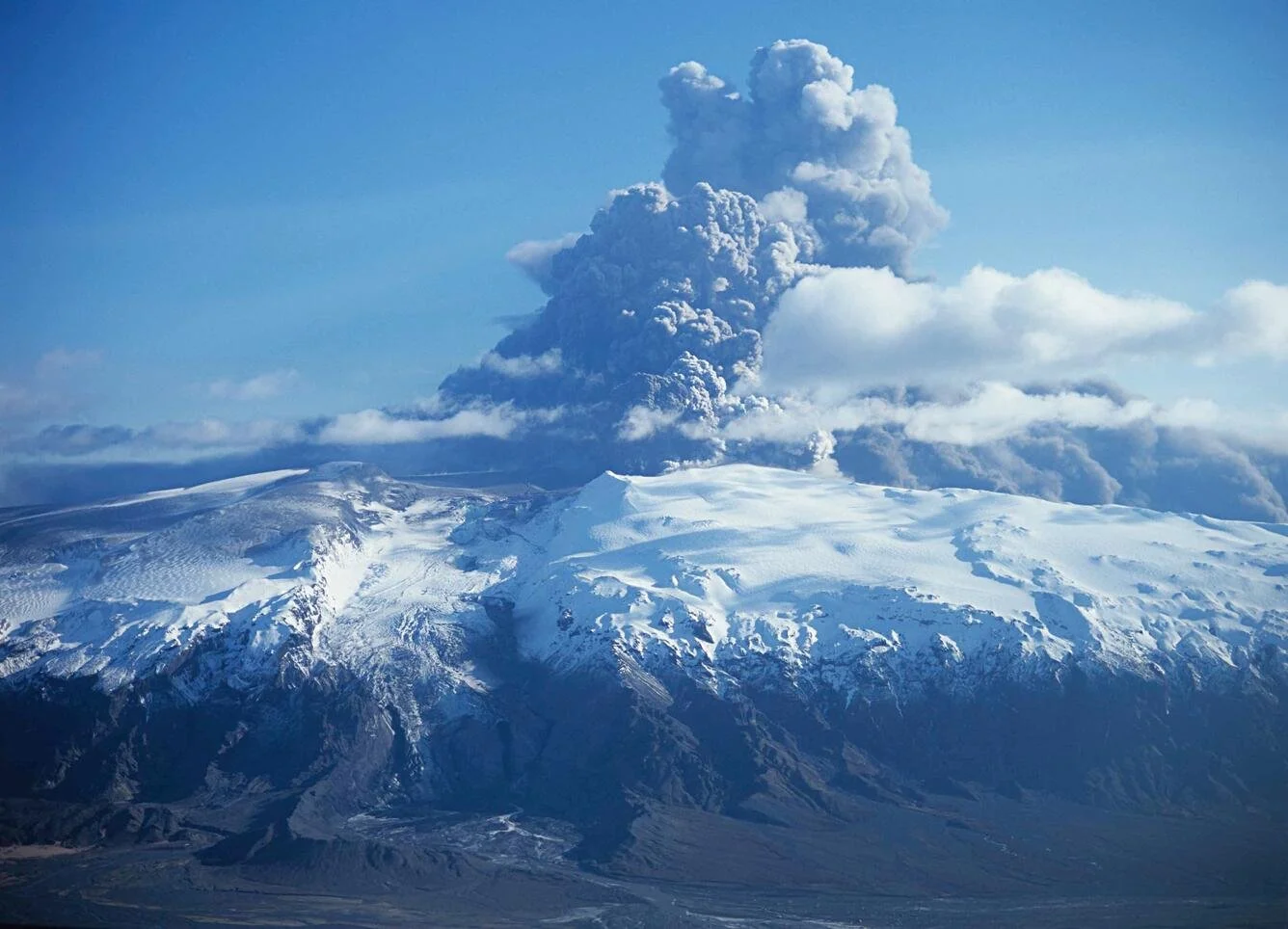
In the podcast, Manga mentions the 2010 Eyjafjallajökull eruption in Iceland, which created an enormous cloud of ash that halted air traffic throughout most of Europe. The volcano erupted under ice, and the meltwater produced flowed into the volcanic vent, helping to drive the explosivity of the eruption. The water helped quench the magma to make volcanic ash, and the steam generated from that cooling helped power the eruption.
Oddur Sigurðsson, Iceland Meteorological Office
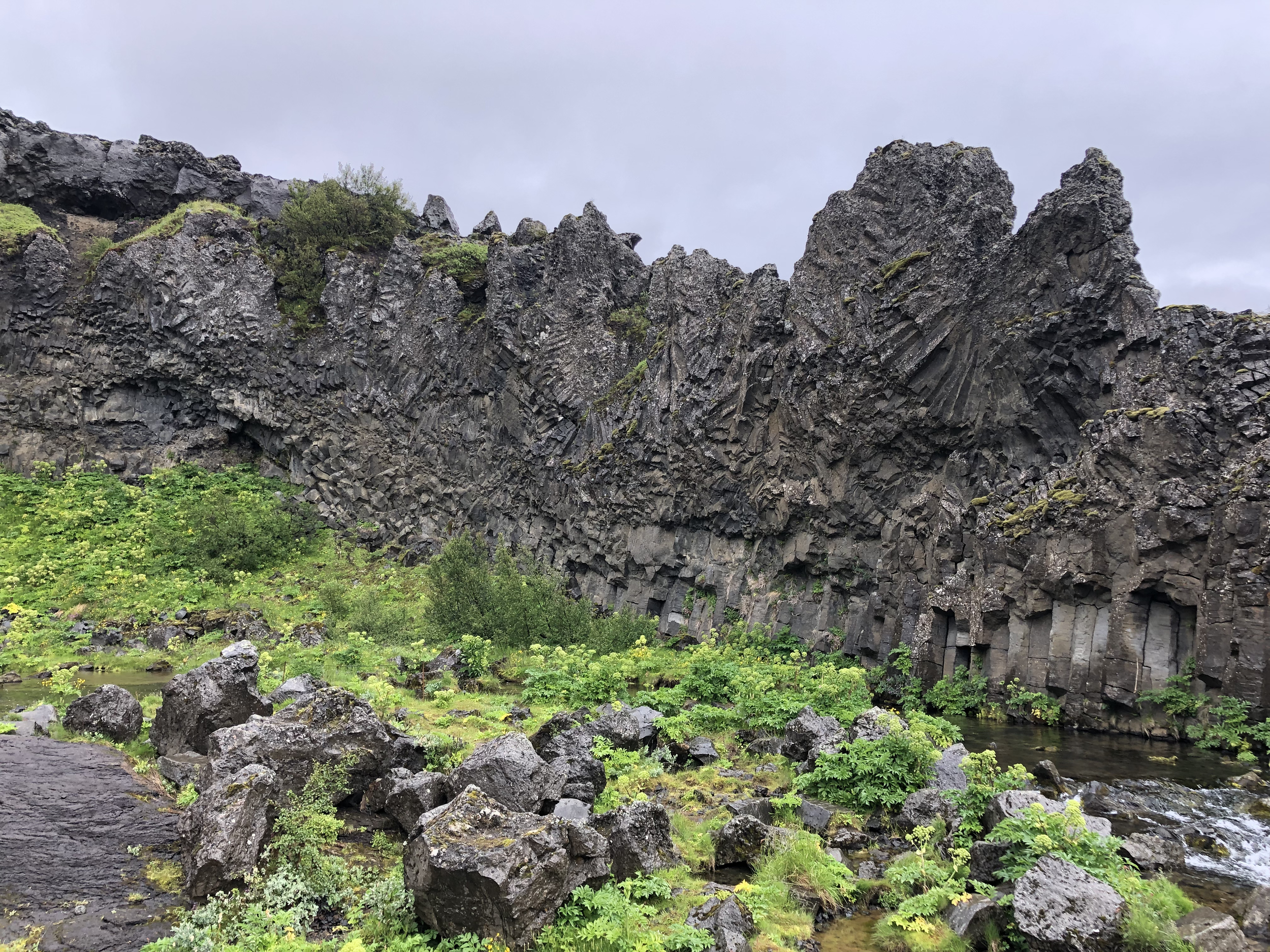
As basaltic lava flows cool under ice, meltwater flows around the lava, and this affects the direction of the thermal gradient. Columns appear at right angles to the steepest temperature gradient as the basalt cools and contracts. The chaotic directions of the columns in this lava flows in southern Iceland reflects this interaction between the lava, ice, and meltwater.
Oliver Strimpel
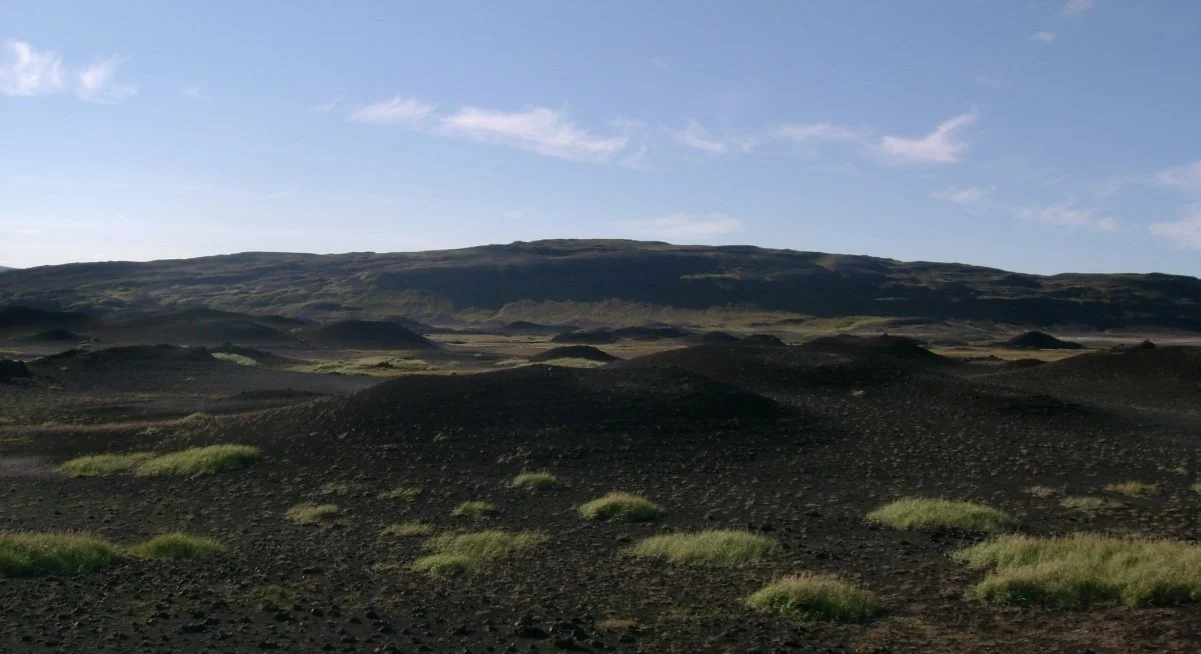
In the podcast, Manga describes how lava flowing over ice can melt and vaporize the meltwater, which then blasts its way through the lava flow making a tiny volcano. These are called rootless cones because there is actually no magma being supplied from below. Above and right: rootless cones made of lava in Iceland.
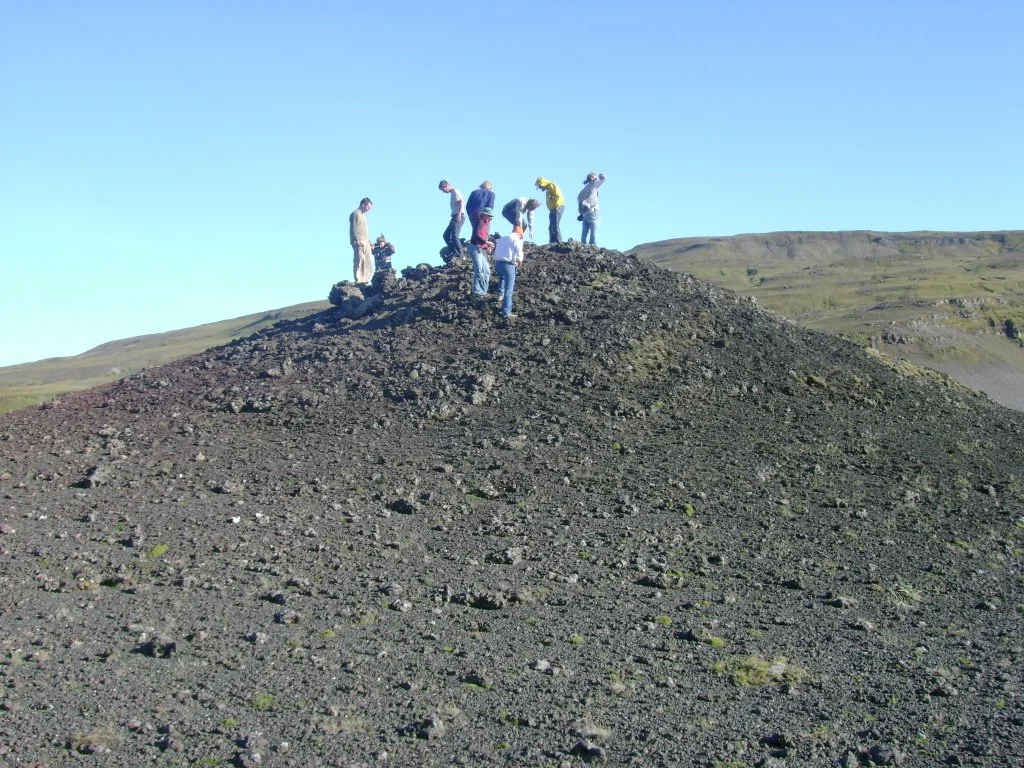
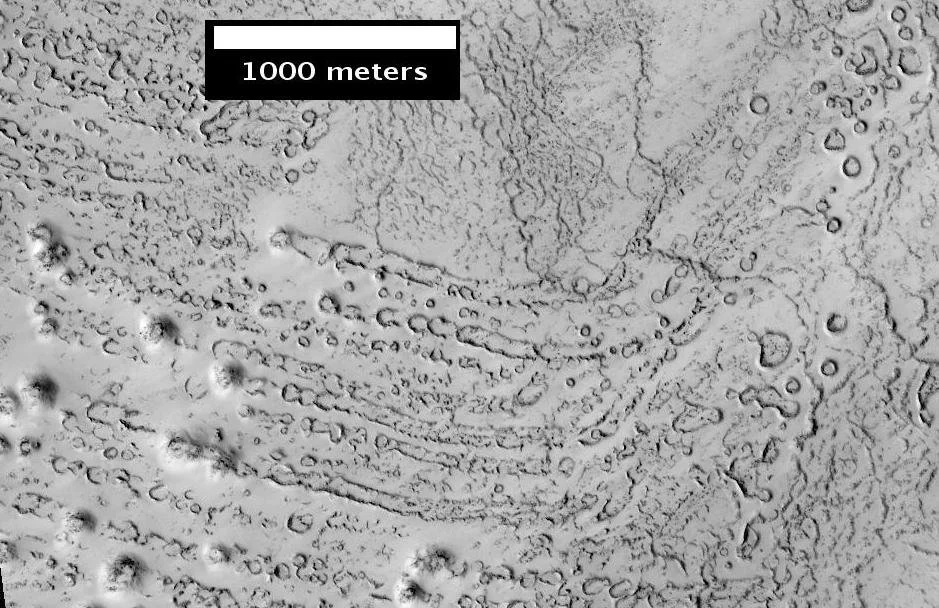
Above, rows of rootless cones in the Phlegra Dorsa region of Mars, formed by lava interacting with ice, as seen by HiRISE in 2008.
Jim Secosky modified HiRISE image, NASA
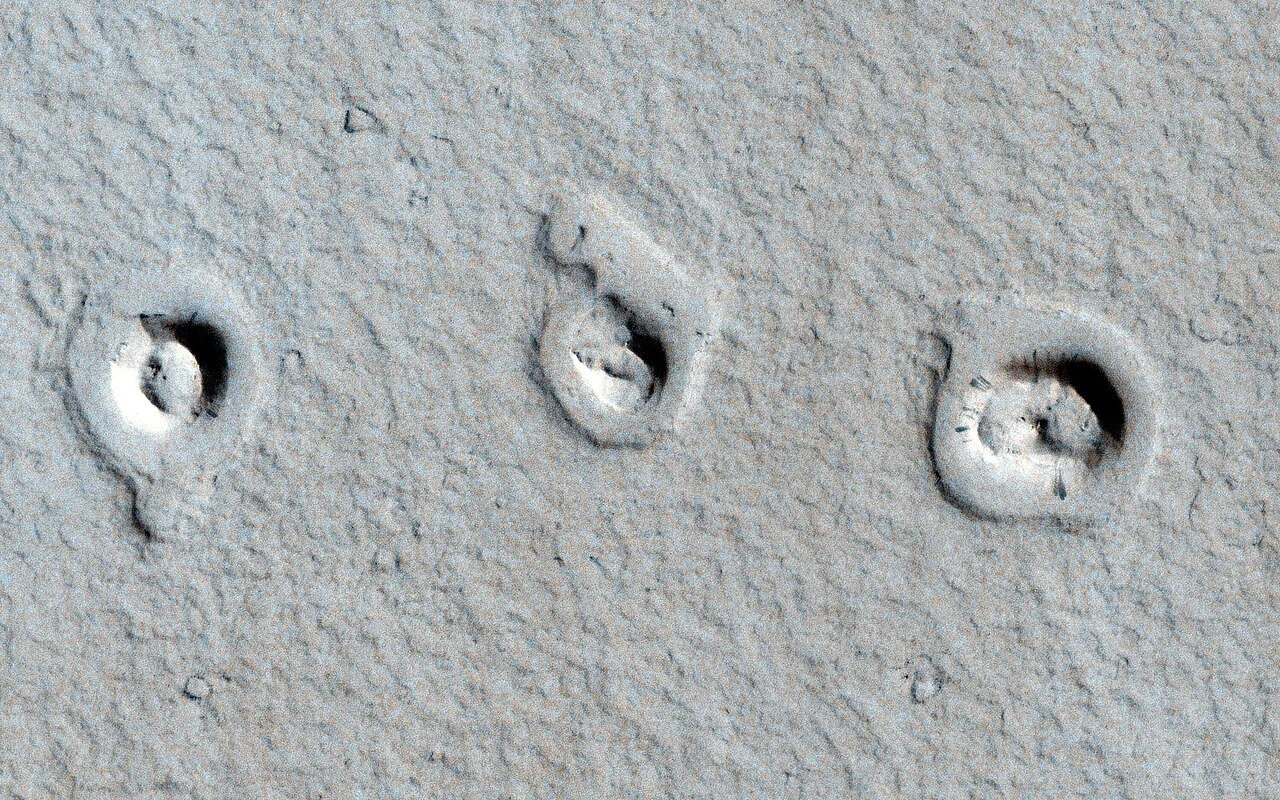
Closeup of three rootless cones in Amazonis Planitia on Mars captured by HiRISE in 2013.
NASA/JPL/University of Arizona
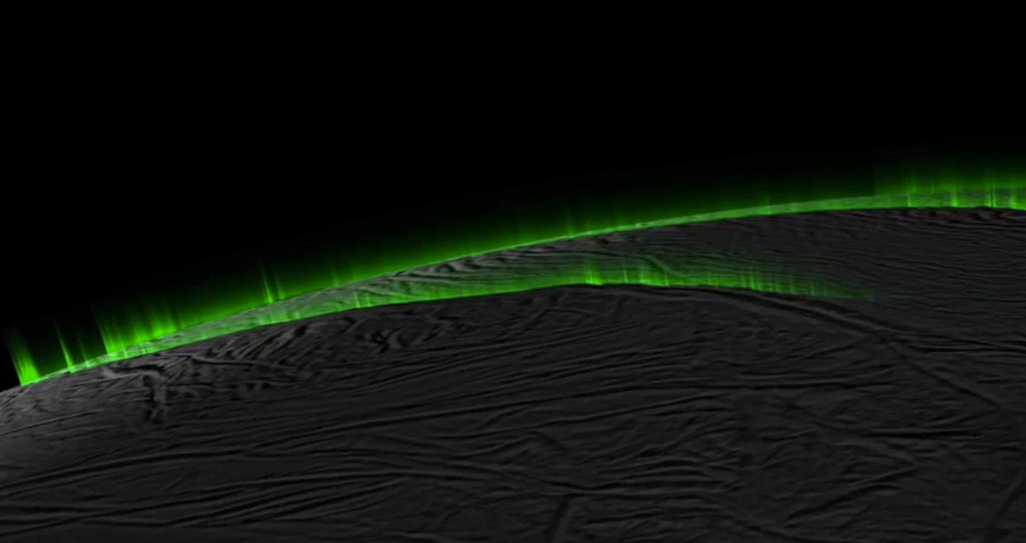
Synthetic image of icy curtain eruptions on Enceladus. The image was compiled from imagery captured by the Cassini spacecraft. The source of the erupted water is a tidally heated liquid ocean below a ~10-km-thick ice cover. As soon as it is ejected, the water freezes and falls back onto the surface as snow, making Enceladus the whitest object in the solar system.
NASA/JPL/Caltech/SSI/PSI