
Steve Brusatte on the Dinosaurs That Survived the Asteroid
Listen to the podcast here or wherever you get your podcasts.

Birds are the only dinosaurs alive today. How do we know that birds are dinosaurs? Why did this one branch survive when so many others, including most birds themselves, did not? And what does the fossil record actually tell us?
Steve Brusatte has traced the evolutionary transition from ground-living theropod dinosaurs to modern birds, drawing on the spectacular feathered fossils unearthed over the past three decades in northeastern China. He is the author of The Story of Birds, published earlier this year and is Professor of Palaeontology and Evolution at the University of Edinburgh.
Podcast Illustrations
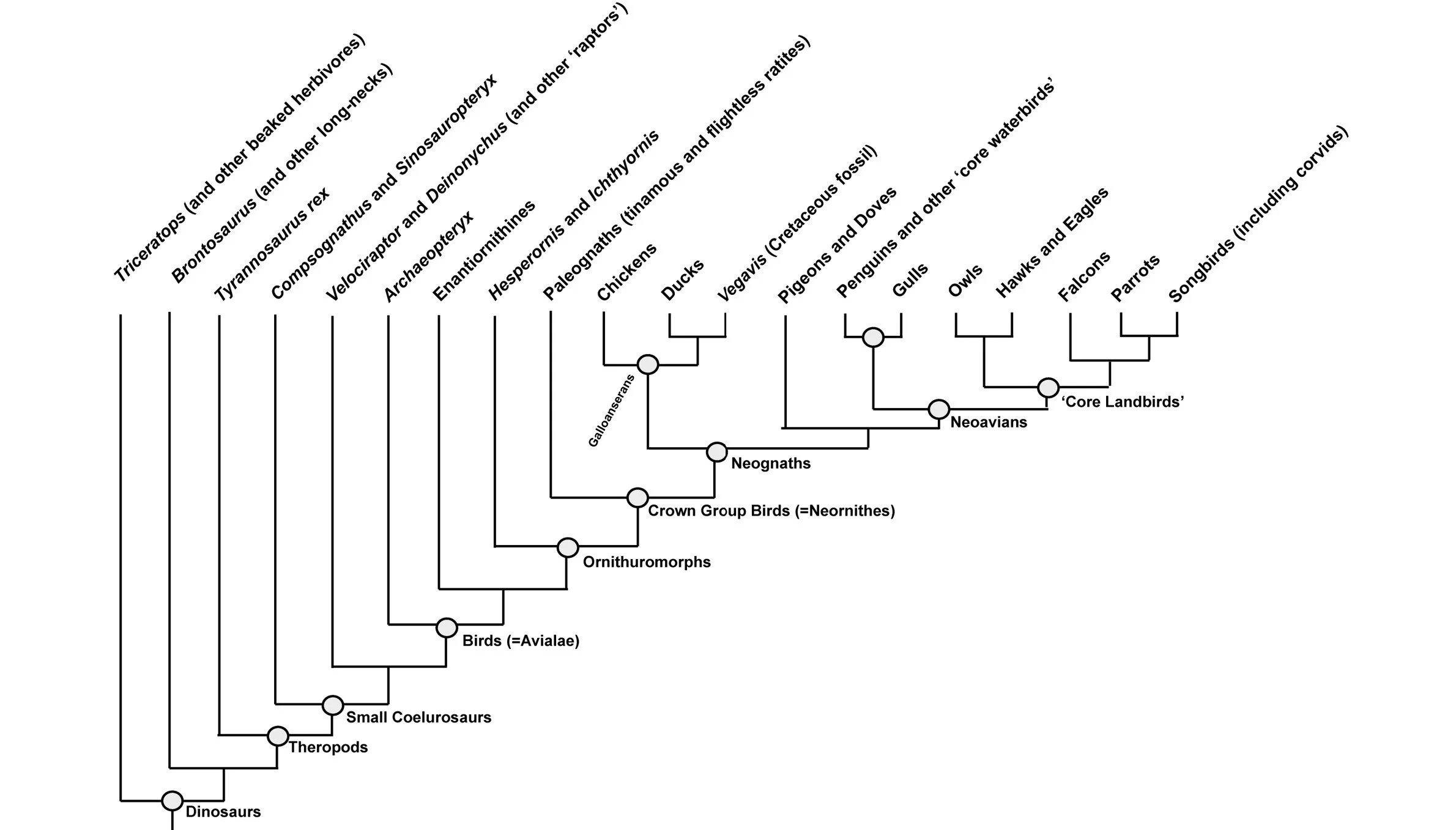
Dinosaur Family Tree
Birds are nested within the dinosaur family tree. Specifically, all modern birds evolved from the crown group birds (Neornithes). Other birds that did not survive the asteroid impact 66 million years ago include Archaeopteryx, Enantiornithes, and Hesperornis and Icthyornis.
First Discovered Feathered Dinosaur
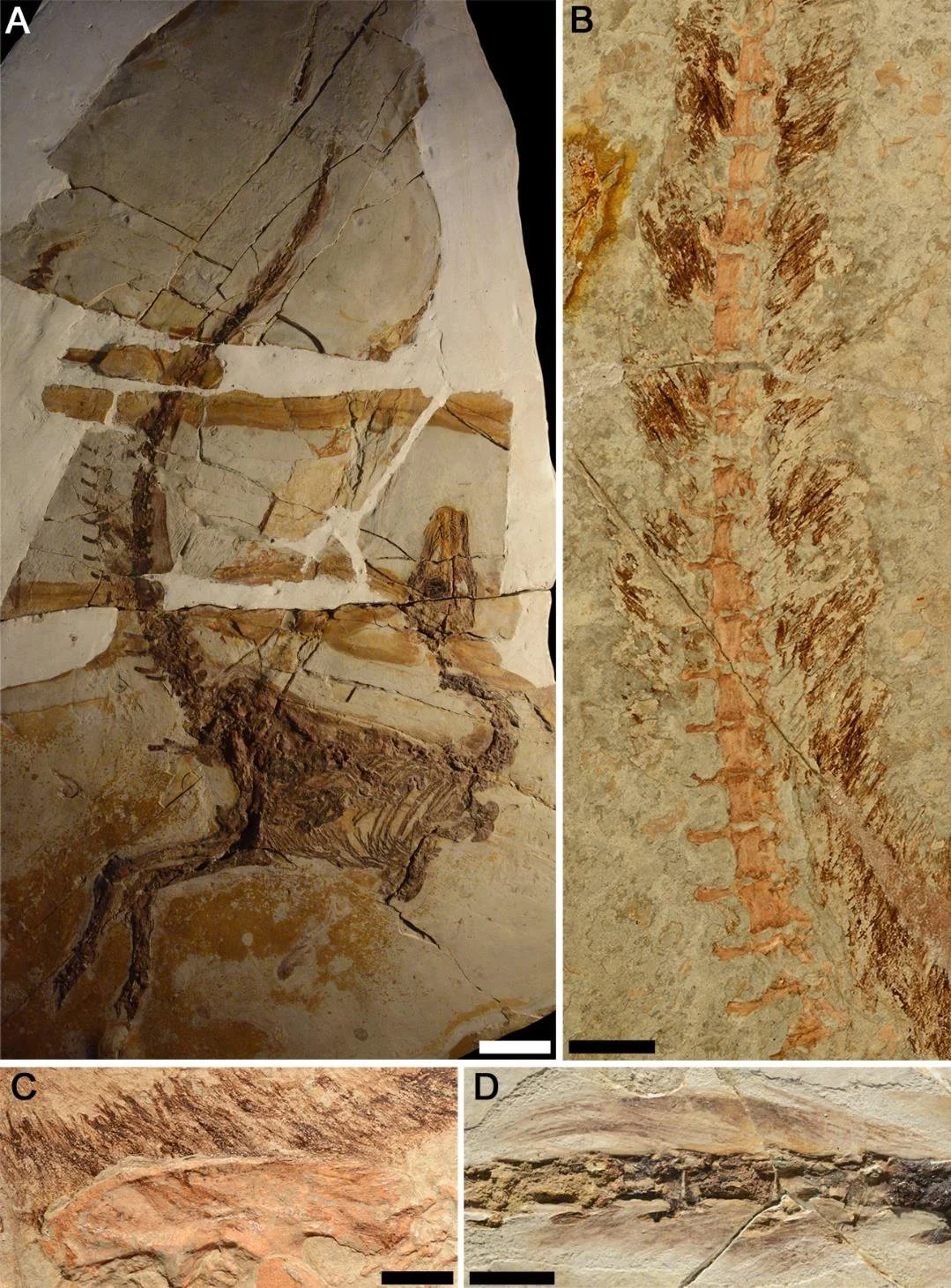
Sinosauropteryx, the first discovered feathered dinosaur. As Brusatte says in the podcast, this fossil was discovered by a farmer in 1996 in Early Cretaceous shales of northeastern China. The dinosaur’s body was covered by a halo of fluff but the creature was not a bird and certainly could not fly. The discovery provided firm evidence that birds are descended from dinosaurs.
The images show plumage Features preserved in Sinosauropteryx From the Lower Cretaceous Jehol Biota of Liaoning Province, China. (A) Whole specimen showing exceptional preservation of tail plumage but little preserved plumage over the body or skull. (B) The proximal tail region of showing the transition into the distinct banding pattern from an unpigmented ventral region and pigmented dorsal region indicative of a countershading pattern. (C) Detail of pigmented feathers above the hip girdle and overlying the ilium. (D) A single band of pigmented plumage on the tail showing the exceptional feather preservation absent from much of the rest of the specimen. Scale bars represent 50 mm in (A), 10 mm in (B) and (D) and 5 mm in (C)
Smithwick, F.M. et al. (2017), Current Biology 27, 3337
The Oldest Known Bird
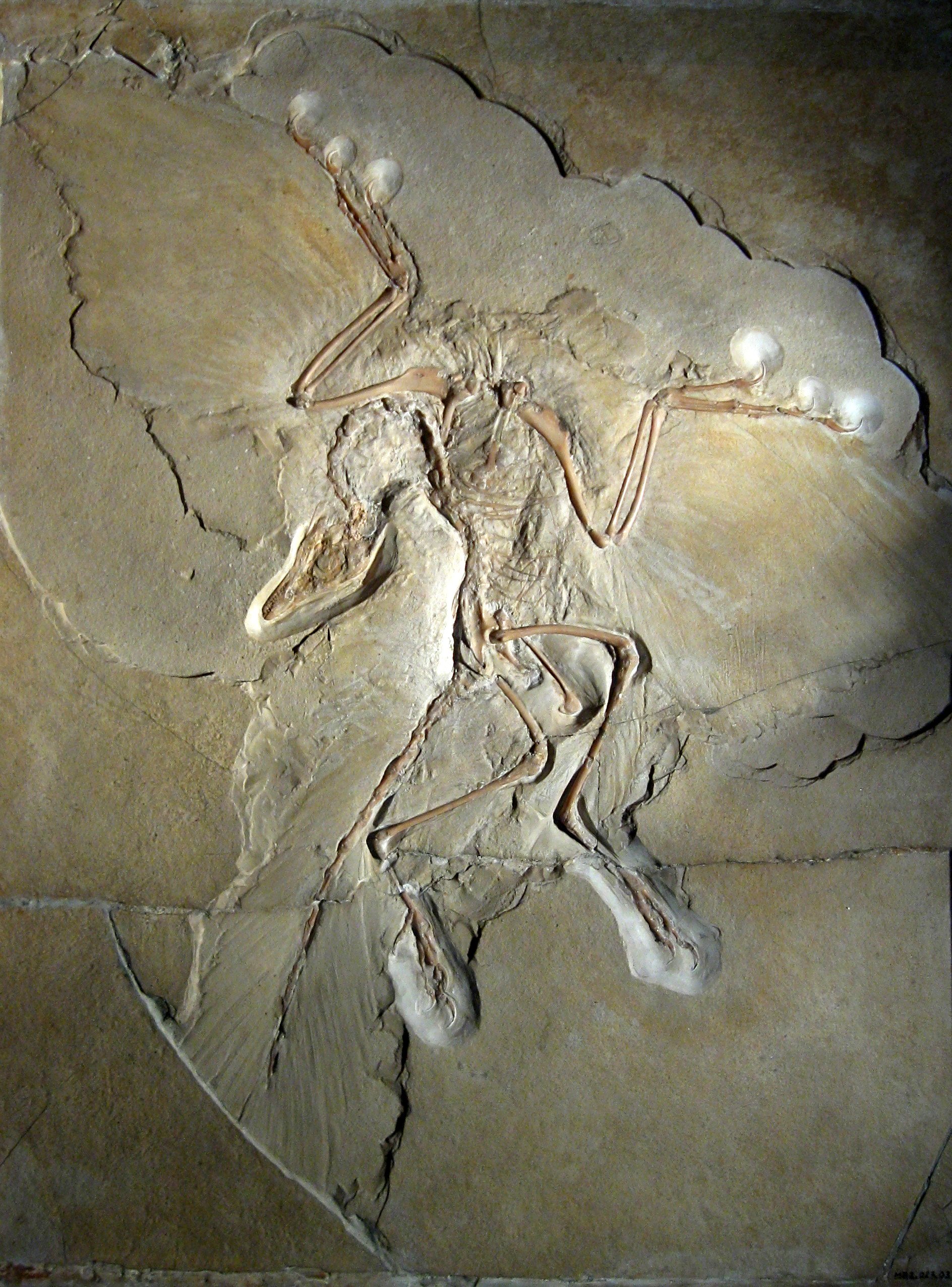
The oldest known bird, Archaeopteryx, discovered in the 1860s and displayed in the Museum für Naturkunde in Berlin. At 150 million years old, it is considered to be the most anatomically archaic member of the group called Aviale, the group that includes modern birds and other species more closely related to them than to other coelurosaur dinosaurs with feathers, such as Microraptor and Velociraptor. It is a bird because it has feathers and wings, but it also retains archaic features that modern birds do not have, such as teeth instead of a beak, raptor dinosaur claws, and a long tail.
H. Raab
Characteristics of Birds That Survived the Asteroid
Evolution of Beaks
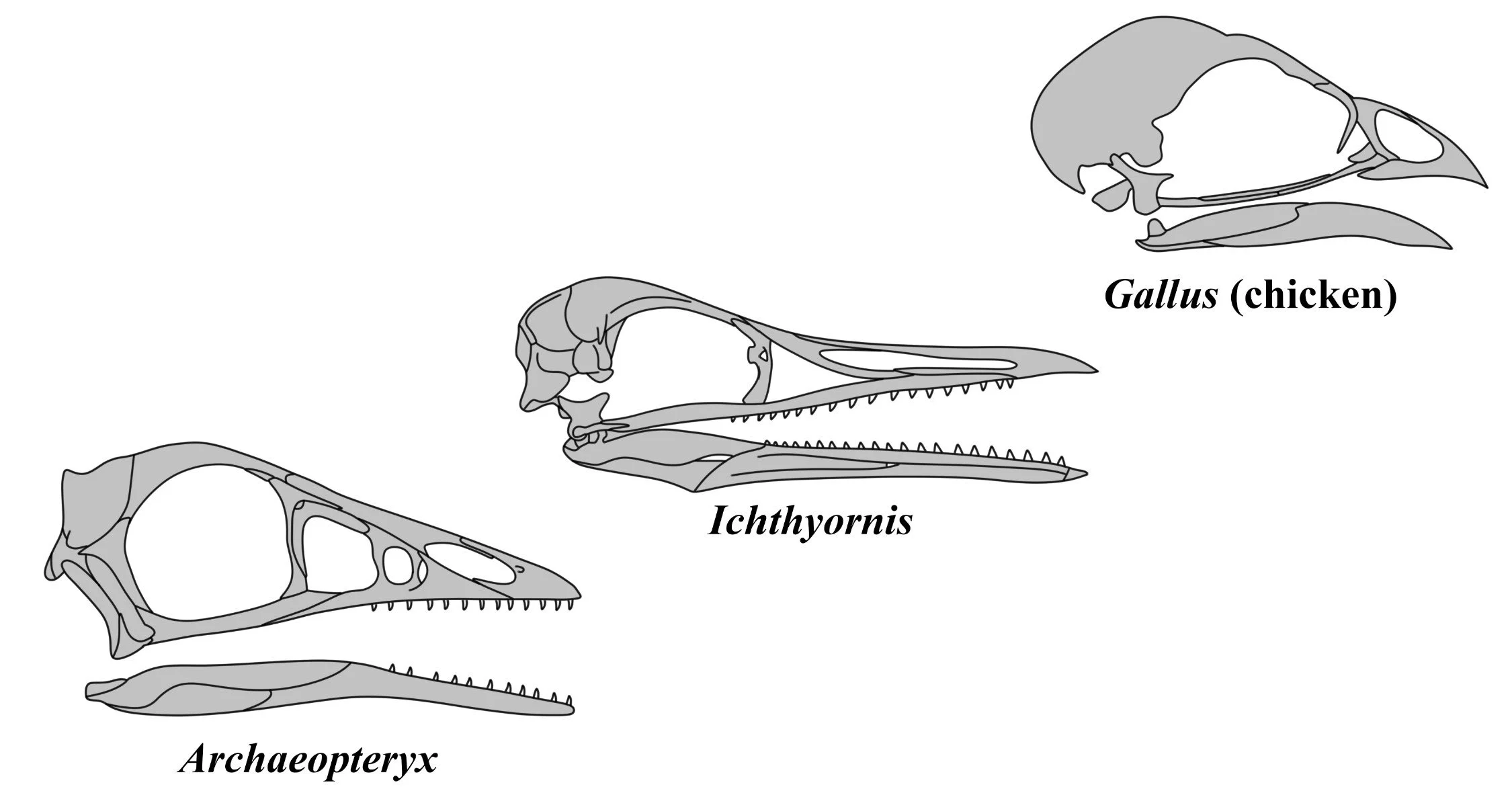
During the Cretaceous, various groups of birds independently lost their teeth and evolved beaks, probably because having a sharp beak that could be shaped into many different forms was useful for eating foods such as seeds and nuts.
Sarah Shelley
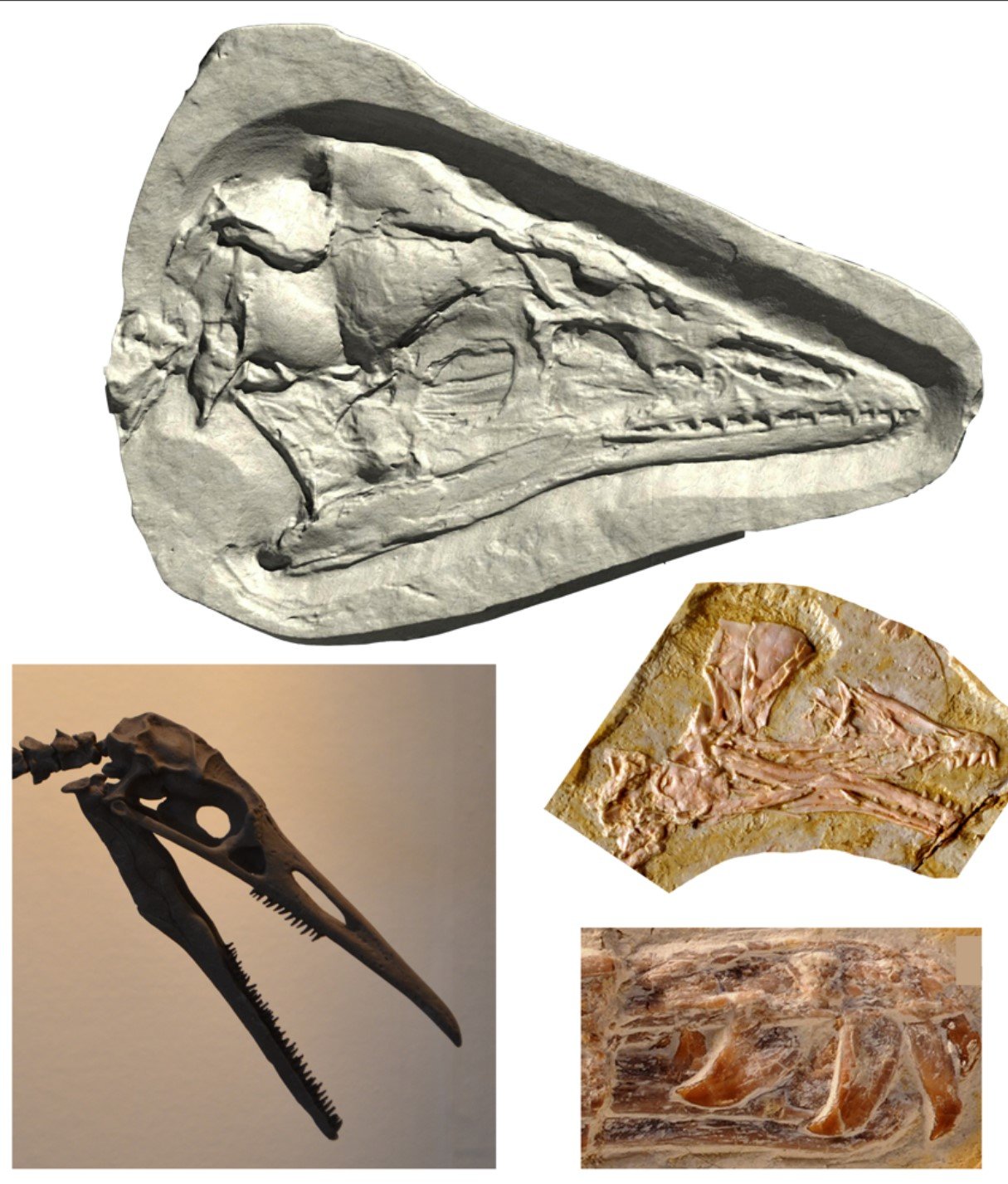
Birds with Teeth
The first birds had teeth. As birds’ digestive systems evolved to take on some of the functions performed by teeth, such as grinding food, birds lost their teeth while their beaks evolved to become dexterous tools for manipulating and crushing foods such as seeds and nuts. Clockwise from top: Archaeopteryx skull visualized by CT scan; the enantiornithine Zhouornis; closeup of teeth of the enantiornithine Longirostravis, and the Cretaceous diving bird Hesperornis.
Larry Witmer; Zhang et al., (2014), PeerJ; Clark et al., (2023), PeerJ; Steve Brusatte
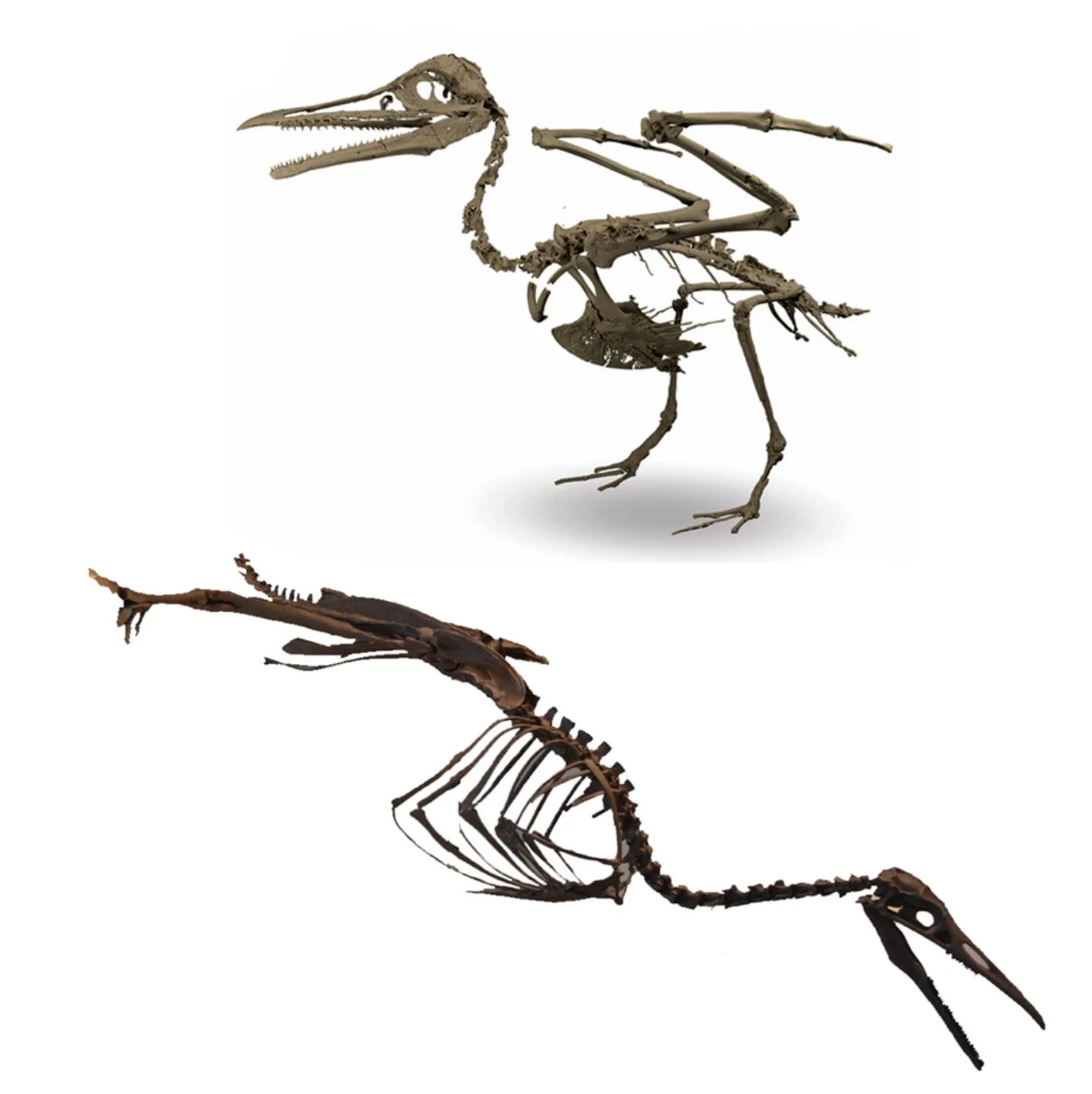
Cretaceous Birds with Teeth
Ichthyornis (top) and Hesperiornis (bottom) appeared in the Cretaceous and had many characteristics shared with modern birds. But they still had teeth.
Benito et al. (2022), PeerJ; Steve Brusatte
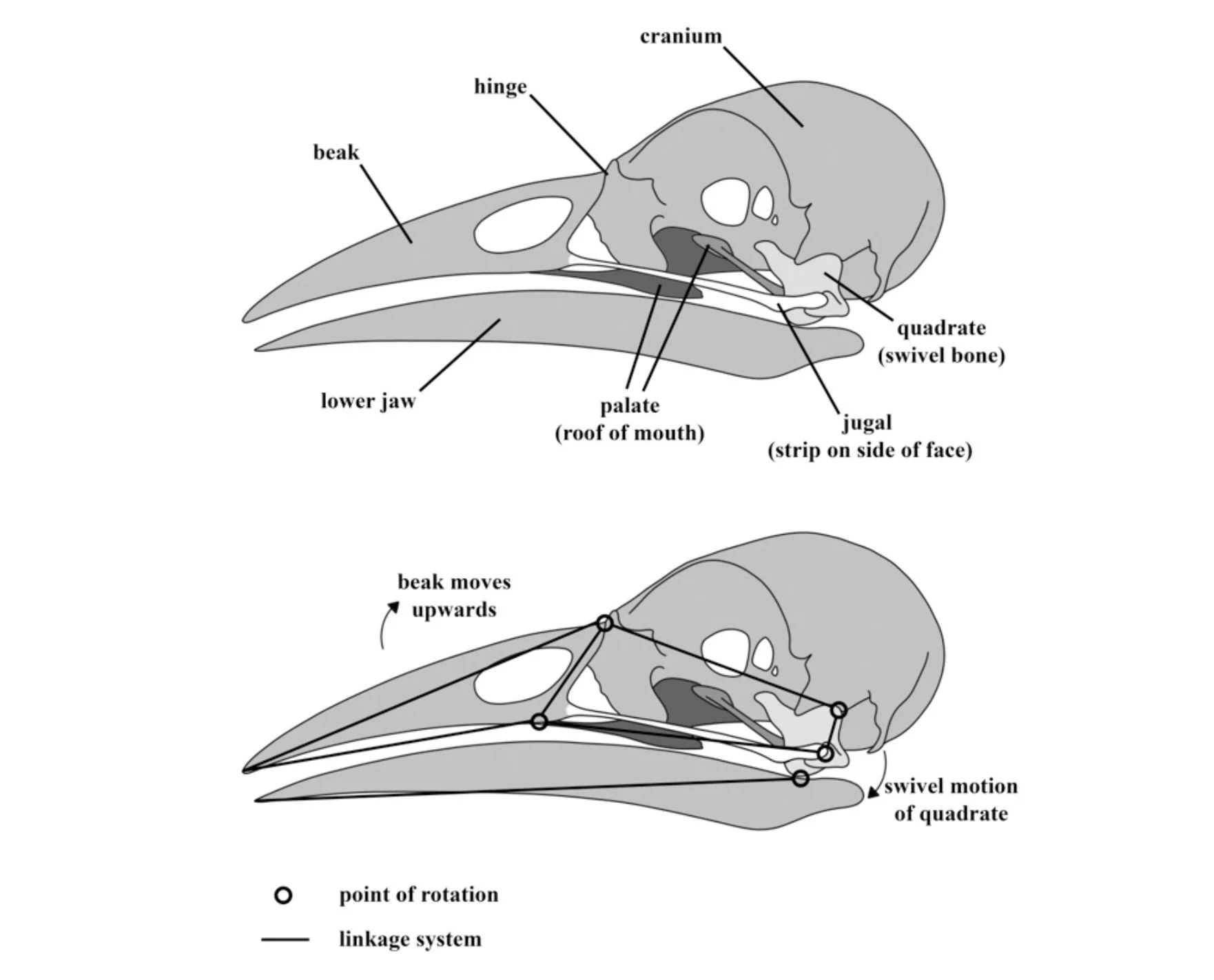
Kinetic Bird Skull
In the podcast, Brusatte explains how bird beaks can be so dexterous. The explanation involves a kinetic system of movement in which the beak can be raised and lowered relative to the back of the cranium. The figure shows the main components of the system, which is driven by the swiveling of the quadrate bone that is connected to linkages that raise the beak and lower the jaw.
Sarah Shelley
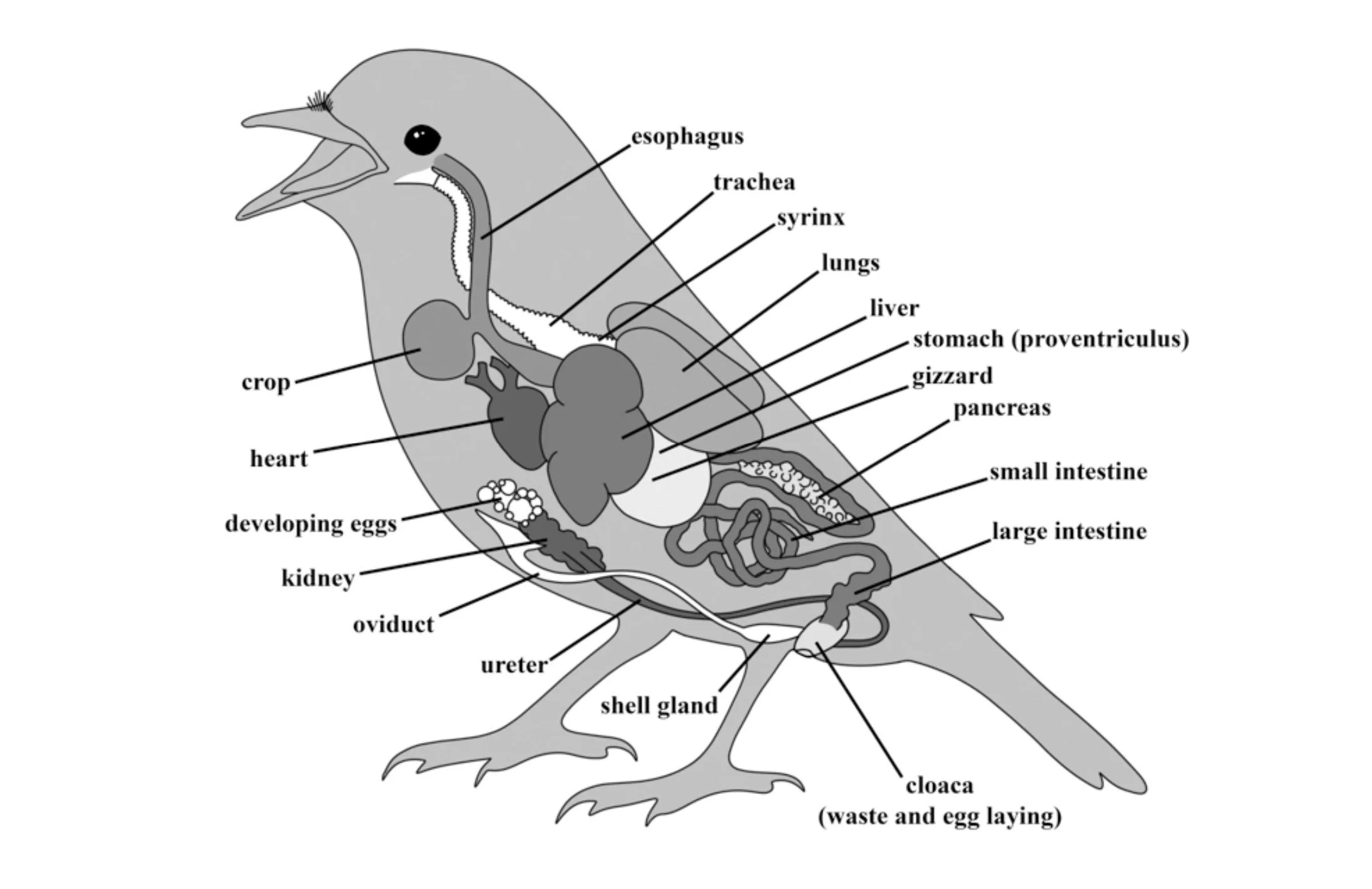
Digestive System
In addition to the digestive components present in many other animals, birds have a crop and a gizzard. The crop is a pouch that can store food before it is passed to the stomach for digestion. This allows a bird to eat a lot of food at once, but dispatch it through the digestive system over a prolonged period of time to avoid overwhelming the system. The stomach is divided into a front section with enzymes that break down food chemically, and a back portion, the gizzard, which grinds the food down mechanically. The gizzard often contains stones and grit intentionally eaten by the bird.
Sarah Shelley
Rapid Growth
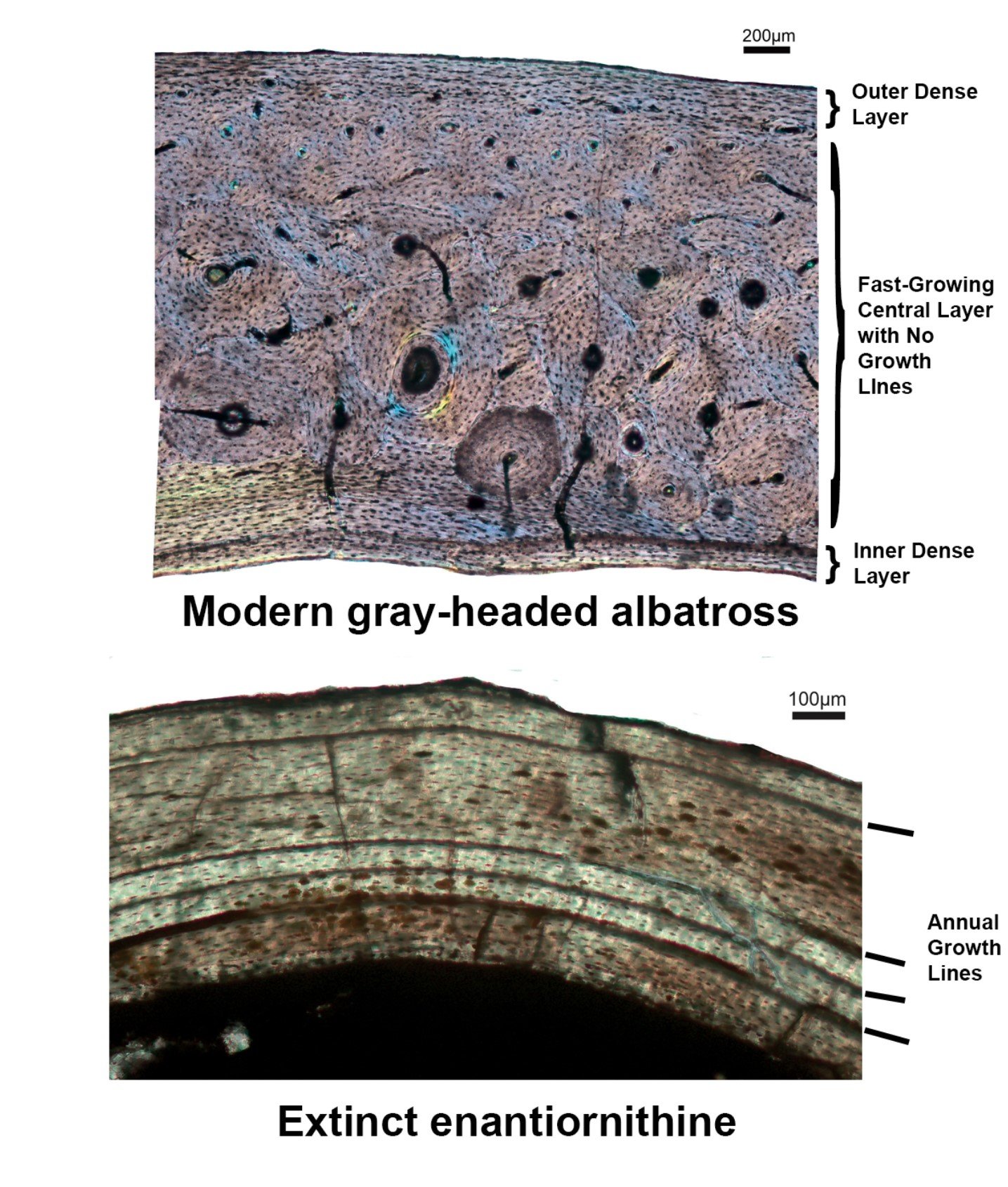
In the podcast, Brusatte pointed out birds’ remarkably rapid growth rates from hatchling to adult within a single year. This minimizes the time spent in a vulnerable, immature state, and it appears to be a characteristic that favored survival through the asteroid impact and aftermath. The CT scans of bird bones show annual growth lines of slow-growing extinct enantiornithines (bottom) compared with a three-layered rapid growth structure of modern birds that mature within a single year (top).
Anusuya Chinsamy
Pre-Asteroid Birds Living at High Latitudes
Fieldwork in Antarctica
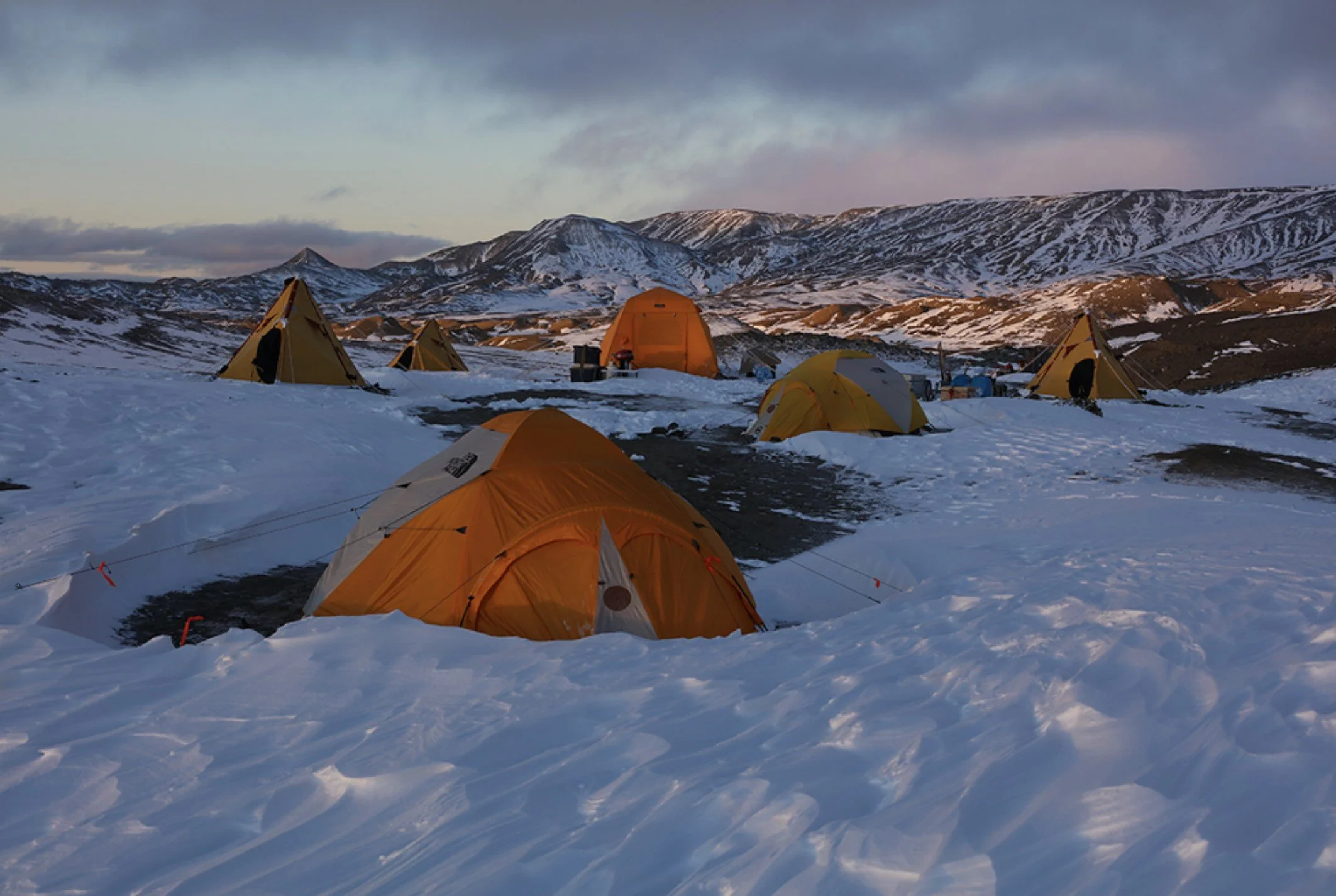
In the podcast, Brusatte describes the rigors that researchers such as Matt Lamana and Julia Clark endured in order to search for fossils in Antarctica. The image shows their camp on Seymour Island. Birds, such as Vegavis and Asteriornis, living at such high latitudes would have had to survive long periods of dark and cold. Brusatte suggests that by adapting to live in such environments, birds may have developed traits that served them well when the asteroid struck.
Asteriornis
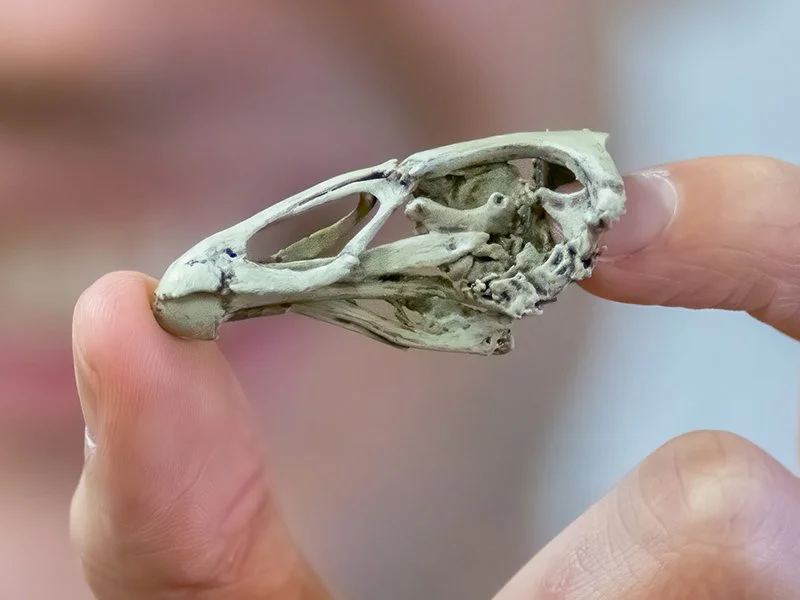
Skull of Asteriornis, a small, light-weight bird and member of the galloanseran family. The bird had many characteristics shared with modern birds. The fossil was found in rocks that were at high southern latitudes during the Cretaceous.
Daniel Field